

A major step in the move to establish state police was taken yesterday with the National Assembly transmitting the Constitution Alteration Bill to state Houses of Assembly for concurrence.
The Constitution requires the concurrence of two-thirds of the 36 state Houses of Assembly to alter any provision after passage by the National Assembly.
Not less than 24 states are required for the concurrence.The Constitution requires the concurrence of two-thirds of the 36 state Houses of Assembly to alter any provision after passage by the National Assembly.
Both the Senate and the House of Representatives passed the executive bill seeking to alter the Constitution to allow for state police before embarking on their vacation.
Clerk to the National Assembly, Mr Kamoru Ogunlana, said in a statement that although there is no fixed constitutional period for the state Assemblies to conclude work on the document sent to them, the leadership of the National Assembly has advised that they conclude work on the document within 30 days.
Although the statement titled “National Assembly Transmits Constitution (Sixth Alteration) Bill, 2027 to State Houses of Assembly for Consideration” did not specifically mention the state police bill, Ayemafuge reports that the lawmakers have only passed the state police bill, while the remaining constitutional alteration bills are pending final consideration.
The statement reads: “The National Assembly has commenced the next stage of the constitutional alteration process with the transmission of the Constitution of the Federal Republic of Nigeria, 1999 (Sixth Alteration) Bill, 2026 to the Houses of Assembly of the 36 States of the Federation for their consideration and approval.
“The Clerk to the National Assembly has, pursuant to the directive of the leadership of the National Assembly, transmitted the Bill to the respective State Houses of Assembly in accordance with Section 9 of the Constitution of the Federal Republic of Nigeria, 1999 (as amended) today, 16th September, 2026.
“Section 9 of the Constitution provides, among other requirements, that a Bill for the purpose of altering the provisions of the Constitution shall not be passed by either House of the National Assembly unless it is approved by resolution of not less than two-thirds of the Houses of Assembly of the 36 States of the Federation.
The Clerk to the National Assembly has requested the State Houses of Assembly to give the Bill the requisite consideration in accordance with their respective legislative procedures and to communicate their resolutions to the National Assembly upon conclusion of their consideration.
“It is noted that the Constitution does not prescribe a specific period within which the State Houses of Assembly are required to communicate their resolutions on a constitutional alteration Bill.
“Nevertheless, in the interest of an orderly, coordinated and timely conclusion of the constitutional alteration process, the State Houses of Assembly are expected to consider the Bill and communicate their respective resolutions to the National Assembly within 30 days of receipt.
“For clarity, the 30-day period is an expected administrative timeframe and does not constitute a constitutional deadline.
“The National Assembly recognises the constitutional responsibility vested in the State Houses of Assembly and respects their independence in the consideration of the Bill.
“The transmission is intended to facilitate the orderly discharge of their constitutional role in the process.
“The National Assembly remains committed to ensuring that the constitutional alteration process is conducted in strict compliance with the Constitution and in accordance with the principles of due process, institutional cooperation and respect for the legislative responsibilities of all tiers of the legislature.
“Upon receipt of the resolutions of the State Houses of Assembly, the National Assembly will proceed with the necessary steps in accordance with the provisions of the Constitution.”, the clerk concluded.
About the author


Rwanda vs Nigeria: Chelle reignites the Super Eagles’ aspirations for the 2026 World Cup in Kigali.
On Friday, Eric Chelle became the inaugural non-Nigerian African coach to take the helm of the Super Eagles. The Malian coach directed his first match, resulting in a 2-0 win against Rwanda during a qualifying round for the 2026 World Cup. Chelle's appointment by the Nigeria Football Federation (NFF) took place on January 7, as he replaced Finidi George and succeeded interim coach Augustine Eguavoen. Since that time, he has dedicated three months to traveling across Nigeria, observing domestic league matches, and engaging with his players based in Europe. However, his initial team selection remained perplexing. Chelle opted for a highly offensive formation in Kigali, which appeared unbalanced on paper. Victor Osimhen, Samuel Chukwueze, Ademola Lookman, and Moses Simon were all included in the attacking lineup, while Alex Iwobi and Wilfred Ndidi occupied the midfield positions. "I had mixed feelings. […]
State Assemblies receive State Police Bill for concurrence
A major step in the move to establish state police was taken yesterday with the National Assembly transmitting the Constitution Alteration Bill to state Houses of Assembly for concurrence. The Constitution requires the concurrence of two-thirds of the 36 state Houses of Assembly to alter any provision after passage by the National Assembly. Not less than 24 states are required for the concurrence.The Constitution requires the concurrence of two-thirds of the 36 state Houses of Assembly to alter any provision after passage by the National Assembly. Both the Senate and the House of Representatives passed the executive bill seeking to alter the Constitution to allow for state police before embarking on their vacation. Clerk to the National Assembly, Mr Kamoru Ogunlana, said in a statement that although there is no fixed constitutional period for the state Assemblies to conclude work […]
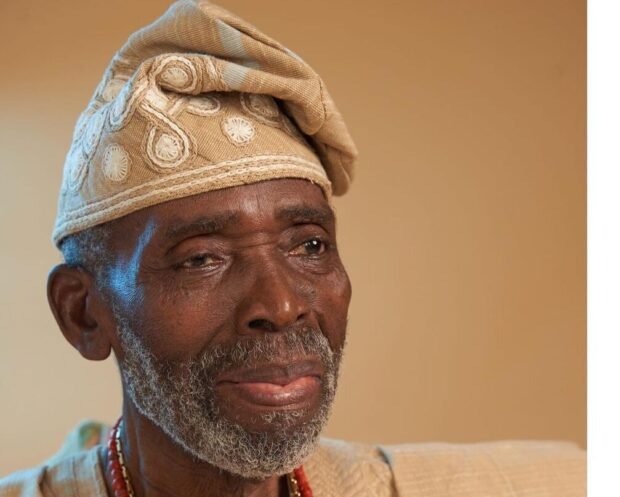
Veteran Nollywood actor, Olu Jacobs dies at 84
Veteran Nigerian actor, Oludotun Baiyewu Jacobs, popularly known as Olu Jacobs, has died at the age of 84. The family said the celebrated actor, whom they described as the “Lion of Lufodo”, died on 16 September. “It is with gratitude to God for a life well lived and fought, that we announce the passing of our dear husband, father, grandfather and uncle, The Lion of Lufodo. According to a family source, the deceased was born on 11/7/1942 and died early morning of 16/09/2026. The family also appealed for privacy as they mourn. “We call on all bloggers and social media influencers to respect our family’s privacy at this time.” Jacobs celebrated his 84th birthday on 11 July. He was one of Nigeria’s most prominent veteran actors, with a career spanning theatre, television and film. Jacobs was also a film executive […]

Hungry Nigerians scramble for bread, rice from APC campaign bus in Abuja
Some hungry Nigerians were seen chasing an All Progressives Congress (APC) campaign bus in Abuja as bread and packs of rice were distributed to residents ahead of the 2027 elections. In a viral video cited by Ayemafuge, several people were seen running after a moving van, struggling to collect the food items being thrown or handed out from the vehicle. The hungry Nigerians, including youths and adults, moved rapidly alongside the vehicle as it drove through the area, with some stretching their hands towards the van in an attempt to collect the packs of rice and bread. The footage showed the scramble for the food items as the moving vehicle continued along the road, with residents following it for an opportunity to receive the distributed provisions. The incident comes amid growing concerns over food insecurity, rising living costs and worsening […]
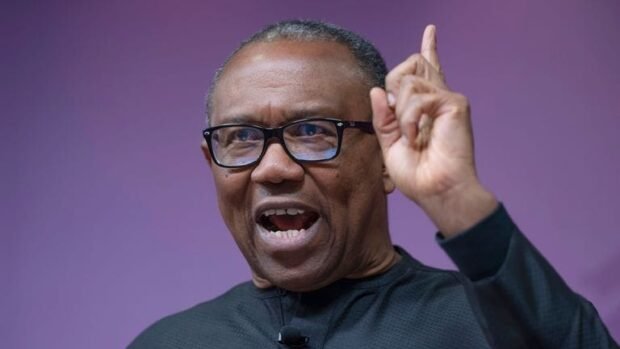
Obi directs UNN to release his academic records, says I’m not afraid of public scrutiny
Peter Obi, the Nigeria Democratic Congress(NDC) presidential candidate, has asked the University of Nigeria, Nsukka, (UNN) to release his academic records following reports of a legal action seeking Certified True Copies(CTCs) of his university certificates and other admission records. In a statement on X(formerly Twitter) on Tuesday, Obi said he had no objection to the release of his Bachelor of Arts degree in Philosophy, which he said was awarded by the university in 1984, as well as other academic records relating to his admission and studies at the institution. Obi’s directive followed reports circulating on social media concerning a legal action by an individual or group seeking CTCs of his degree certificate and other academic credentials. “I wish to state clearly that I have absolutely no objection to the release of these records,” the NDC presidential candidate said. He called […]

Meat seller kills 25-year-old wife, flees
A meat seller, Sodiq Ibrahim, has allegedly killed his 25-year-old wife, Kehinde Onizeokaraga, during a marital disagreement in Ado Ekiti, Ekiti State. It was gathered that the incident happened on Wednesday at about 6:50 a.m in the Dalimore area in Ado-Ekiti. The couple, who hailed from Kogi State, had been experiencing domestic challenges, which reportedly culminated in the fatal attack on the woman. “I am aware they had issues in the marriage to the extent that the lady had left the man’s house due to some irreconcilable differences. “But recently, there were efforts by the suspect to resolve the issue with her, which the deceased was not comfortable with,” a source said on Thursday. The disagreement reportedly escalated into a physical confrontation, during which Sodiq allegedly attacked Kehinde repeatedly with a machete, inflicting severe injuries that eventually led to her […]

Anthony Joshua defeats Kristian Prenga by knockout
Anthony Joshua on Saturday secured a dramatic victory over Kristian Prenga, stopping the heavyweight challenger by knockout after a thrilling contest. According to BBC Sport, Joshua faced an early scare as Prenga came out aggressively and caught the former world champion with powerful punches in the opening round. The Briton was knocked down twice, leaving fans stunned as Prenga looked to pull off a major upset. However, Joshua recovered quickly and showed his experience, responding with relentless pressure and powerful combinations. The former heavyweight champion turned the fight around and forced the stoppage in the second round. He unleashed his right hand in the second round, with the final shot sending Albanian Prenga crashing down and forcing the referee to halt the contest. “It’s more than punch power. That was spirit, that was Latz, that was Sina, that was the […]
Related
Veteran Nollywood actor, Olu Jacobs dies at 84
Veteran Nigerian actor, Oludotun Baiyewu Jacobs, popularly known as Olu Jacobs, has died at the age of 84. The family said the celebrated actor, whom they described as the “Lion of Lufodo”, died on 16 September. “It is with gratitude to God for a life well lived and fought, that we announce the passing of our dear husband, father, grandfather and uncle, The Lion of Lufodo. According to a family source, the deceased was born on 11/7/1942 and died early morning of 16/09/2026. The family also appealed for privacy as they mourn. “We call on all bloggers and social media influencers to respect our family’s privacy at this time.” Jacobs celebrated his 84th birthday on 11 July. He was one of Nigeria’s most prominent veteran actors, with a career spanning theatre, television and film. Jacobs was also a film executive […]
Hungry Nigerians scramble for bread, rice from APC campaign bus in Abuja
Some hungry Nigerians were seen chasing an All Progressives Congress (APC) campaign bus in Abuja as bread and packs of rice were distributed to residents ahead of the 2027 elections. In a viral video cited by Ayemafuge, several people were seen running after a moving van, struggling to collect the food items being thrown or handed out from the vehicle. The hungry Nigerians, including youths and adults, moved rapidly alongside the vehicle as it drove through the area, with some stretching their hands towards the van in an attempt to collect the packs of rice and bread. The footage showed the scramble for the food items as the moving vehicle continued along the road, with residents following it for an opportunity to receive the distributed provisions. The incident comes amid growing concerns over food insecurity, rising living costs and worsening […]
Obi directs UNN to release his academic records, says I’m not afraid of public scrutiny
Peter Obi, the Nigeria Democratic Congress(NDC) presidential candidate, has asked the University of Nigeria, Nsukka, (UNN) to release his academic records following reports of a legal action seeking Certified True Copies(CTCs) of his university certificates and other admission records. In a statement on X(formerly Twitter) on Tuesday, Obi said he had no objection to the release of his Bachelor of Arts degree in Philosophy, which he said was awarded by the university in 1984, as well as other academic records relating to his admission and studies at the institution. Obi’s directive followed reports circulating on social media concerning a legal action by an individual or group seeking CTCs of his degree certificate and other academic credentials. “I wish to state clearly that I have absolutely no objection to the release of these records,” the NDC presidential candidate said. He called […]
Meat seller kills 25-year-old wife, flees
A meat seller, Sodiq Ibrahim, has allegedly killed his 25-year-old wife, Kehinde Onizeokaraga, during a marital disagreement in Ado Ekiti, Ekiti State. It was gathered that the incident happened on Wednesday at about 6:50 a.m in the Dalimore area in Ado-Ekiti. The couple, who hailed from Kogi State, had been experiencing domestic challenges, which reportedly culminated in the fatal attack on the woman. “I am aware they had issues in the marriage to the extent that the lady had left the man’s house due to some irreconcilable differences. “But recently, there were efforts by the suspect to resolve the issue with her, which the deceased was not comfortable with,” a source said on Thursday. The disagreement reportedly escalated into a physical confrontation, during which Sodiq allegedly attacked Kehinde repeatedly with a machete, inflicting severe injuries that eventually led to her […]
Anthony Joshua defeats Kristian Prenga by knockout
Anthony Joshua on Saturday secured a dramatic victory over Kristian Prenga, stopping the heavyweight challenger by knockout after a thrilling contest. According to BBC Sport, Joshua faced an early scare as Prenga came out aggressively and caught the former world champion with powerful punches in the opening round. The Briton was knocked down twice, leaving fans stunned as Prenga looked to pull off a major upset. However, Joshua recovered quickly and showed his experience, responding with relentless pressure and powerful combinations. The former heavyweight champion turned the fight around and forced the stoppage in the second round. He unleashed his right hand in the second round, with the final shot sending Albanian Prenga crashing down and forcing the referee to halt the contest. “It’s more than punch power. That was spirit, that was Latz, that was Sina, that was the […]
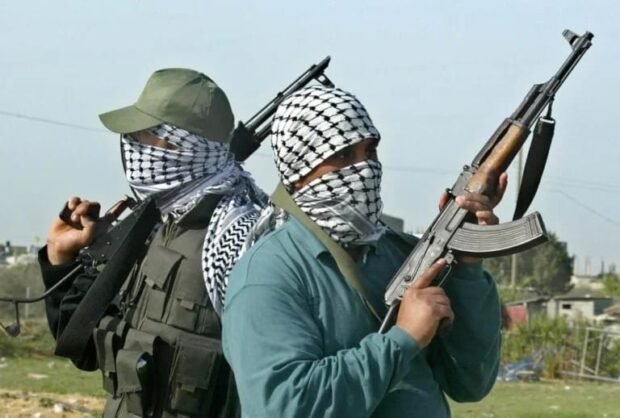
Gunmen kidnap LG chairman – Kill four security operatives
Gunmen suspected to be bandits have abducted the Chairman of Bungudu Local Government Area of Zamfara State, Nura Umar Abdullahi. The armed men also killed two policemen and two local vigilantes who attempted to foil the attack. The gunmen invaded the chairman’s residence in the early hours of Saturday and took him, his mother, wife and two children away after overpowering his security personnel. A source, however, said the family members were later released, while the abductors moved away with the local government boss. The bandits reportedly engaged security personnel and local vigilantes in a gun battle while making their escape, leaving several people injured by stray bullets. The chairman’s wife said the bandits informed them that their target was the council boss and asked the family members to return home. “They released us at a shallow distance into the […]
Be the first to leave a comment