

The words were few, but they carried the weight of a life shattered. “He forced me. He took my virginity.”
For more than two months now, Precious, the girl, who had only recently completed secondary school, has remained in a hospital in Abuja, battling a serious and unexplained deterioration in her health following an alleged rape.
Funds are unavailable for treatment because her poor parents live in the village and the older sister she has in Abuja barely has enough to feed both of them.
According to a concerned lady who works with the National Agency for the Prohibition of Trafficking in Persons with direct access to Precious’ condition, she is reportedly unable to speak and has at various times depended on oxygen to stay alive.
Her once ordinary life – that of a young girl only beginning to navigate adulthood – has been replaced by hospital beds, medical procedures, drugs, mounting bills and a family desperately searching for answers.
Her sister, who is taking care of her in Abuja, has been forced to shoulder much of the responsibility because their parents live in their village. The family says it has borrowed money, taken loans and obtained salary advances to keep the teenager alive. But the little money available has since runs out.
And while doctors continue to battle to save her life, investigators are still trying to determine exactly what happened to her and whether any substance was administered to her around the time of the alleged sexual assault.
The case is being investigated by the National Agency for the Prohibition of Trafficking in Persons (NAPTIP). According to the agency, preliminary findings indicate that the sexual encounter was not consensual. The circumstances surrounding the incident, however, remain the subject of investigation.
For a young and rather naïve girl, what initially seemed non-threatening became a dangerous encounter that now leaves her and family members with lifelong trauma and psychological scars.
Before the incident, Precious had reportedly been communicating with the 36-year-old suspect through WhatsApp. Investigators said their conversations suggested that the man had been grooming the teenager before the encounter.
In one exchange cited by investigators, the girl reportedly asked whether the sexual experience would be painful. The response, according to the investigation, was “no, you will enjoy it.” What happened afterwards is now at the centre of a criminal investigation.
In the face of deep concerns and suspicions, the suspect has continued to deny giving the girl any substance capable of causing her present condition. He told investigators that the girl had given an impression of being 19 years old and that he therefore believed she was old enough to engage in sexual activity.
Precious’ family, however, insists that she is 17. The distinction is crucial. Yet, beyond the question of age is the more fundamental issue of consent and the circumstances in which the sexual act occurred.
According to investigators, the teenager told them through her phone that she had been forced. Her physical condition has since become the family’s most immediate concern.
What really happened after the alleged rape? The suspect reportedly told investigators that the girl complained of pain after the sexual encounter and that he only gave her two tablets of a painkiller.
But the senior NAPTIP official handling the case said investigators became concerned when the girl’s health deteriorated severely.
“We asked the suspect what he administered on the girl that has affected her health, and he claimed he did not give her anything,” the official said.
He later admitted that he gave her two tablets of a brand of painkiller because she complained of pain after the act.”
According to the official, the suspect maintained that the drug was an ordinary painkiller and even claimed that he had some remaining at home. Investigators searched his residence but could not find the medication. He was also reportedly unable to identify where he normally purchased the drug.
The precise cause of the girl’s deteriorating medical condition remains unclear; an uncertainty that has compounded the family’s anguish. From an Intensive Care Unit of a government-owned tertiary hospital in Abuja where she was initially admitted, Precious has now been moved to a regular ward despite her condition showing little improvement.
Even at that, she is only receiving care on the basis of scanty but crucial humanitarian support that is fast running out. As the bills mounted and the family struggled to pay amounts they could not afford even after raising small loans, moving her to a regular ward became inevitable even though what she needs is close observation at the ICU.
A restricted video seen by our correspondent in Abuja showed the teenager looking extremely weak and pale, with saliva drooling uncontrollably from her mouth. She has also reportedly developed a back sore during her prolonged illness.
At one point, the family tried to raise more than N300,000 to purchase alternative medication after doctors reportedly determined that the drugs she had been receiving were no longer effective. For a family already struggling to meet daily expenses, the amount was enormous.
Her sister had reportedly borrowed money, taken loans and collected a salary advance from her workplace. Still, the bills continue.
According to the NAPTIP investigator, members of the suspect’s family initially contributed towards the girl’s medical expenses. Some belongings in the suspect’s home were reportedly sold to raise money.
On one occasion, the suspect allegedly transferred N50,000 to the victim’s family. But even that amount was far short of what was required for the teenager’s continuing treatment.
Now, the family is appealing for help.
While Precious fights for her health, the family faces another painful reality — pursuing justice while trying to keep her alive. The suspect, who was initially detained during the investigation, has since been released on bail and reportedly reports to no NAPTIP once a week.
For the family, the situation is difficult to comprehend. They are trying to pay hospital bills, care for a seriously ill teenager and simultaneously navigate a criminal justice process they hardly understand.
The case therefore raises a question that goes beyond this particular family: What happens to a child who survives sexual violence but whose family does not have the financial means to sustain her treatment or pursue justice?
The answer cannot be left entirely to a struggling family. The responsibility must necessarily involve the state, law-enforcement agencies, health institutions, civil-society organisations and the wider community.
NAPTIP enforces the Violence Against Persons (Prohibition) (VAPP) Act 2015 to investigate rape, rescue victims, and prosecute offenders in Nigeria. The Director of NAPTIP’s VAPP Department, Mrs Rebecca Aderonke Enwusoyele, and other relevant authorities have continued to handle significant responsibilities towards ensuring that survivors of sexual violence in the FCT receive the protection and institutional support required under Nigeria’s legal and policy framework
For Precious, however, such institutional response is not an abstract policy question; it is a matter of life.
‘Rape is almost a daily issue in Abuja’
NAPTIP says the teenager’s ordeal is part of a much larger and deeply disturbing pattern. According to an official involved in handling cases of sexual violence in the Federal Capital Territory, reports involving children are encountered with alarming frequency.
“If it is rape, it is like a daily issue in Abuja,” the official said. The cases, the agency said, include children between two and 15 years old.
In one case, an underage girl allegedly told investigators that a man invited other people to a location where she was restrained while he sexually assaulted her.
In another, a 16-year-old girl reported that she had allegedly been raped by her in-law. The man was arrested and detained, but the case subsequently ran into a familiar obstacle.
According to NAPTIP, the girl’s mother returned to say that members of the family had pleaded with her to withdraw the complaint. The girl was allegedly expected to forget what had happened and move on.
The numbers or statistics of rape victims, where they exist, offer only a partial glimpse of the problem. A four-year retrospective study of sexual-assault cases at the University of Abuja Teaching Hospital, Gwagwalada, found that 58 cases were available for analysis between 2015 and 2018. Nearly eight in 10 victims were below 20, with a mean age of just 14.1 years, while 75.9 per cent were pupils or students. More than six in 10 of the alleged assailants were known to the victims.
The study also found that only 60.3 per cent of the victims reported to the police and just 32.8 per cent completed the three-month medical follow-up. The researchers cautioned that the available data could not establish the true prevalence of sexual assault because stigma and other factors discourage reporting.
That finding gives an unsettling dimension to the experience of Precious. Sexual violence does not always come from the stranger lurking in the shadows. In the Abuja study, the alleged assailant was someone known to the victim in 63.8 per cent of cases. Most of the assaults occurred during the daytime and more than 60 per cent took place at home or in an office.
For children and adolescents, therefore, the familiar places and familiar faces around them cannot automatically be equated with safety. The danger can sometimes be concealed within relationships built on trust, familiarity or perceived affection.
Nor is the problem confined to individual cases. The National Human Rights Commission’s May 2025 dashboard recorded 1,152 complaints of sexual violence and 3,361 complaints of domestic violence nationwide in that month alone, alongside continuing concerns about sexual abuse and other violations of children’s rights.
By June, the Commission said sexual and gender-based violence remained prominent among the complaints it received, while its subsequent 2026 outlook identified the expansion of support for survivors of gender-based violence and child protection as areas requiring sustained attention.
Such figures do not represent the total number of incidents—indeed, the Abuja research points to substantial underreporting—but they underline the scale of a problem that cannot be left to victims and their families to confront on their own.
For investigators, family intervention remains one of the most difficult obstacles in cases of sexual violence involving children. The problem is often rooted in fear, shame, financial dependence, family pressure or a desire to protect the reputation of the alleged perpetrator. NAPTIP officials said families sometimes ask that cases be withdrawn after arrests have been made.
“Most of these people are family members and relatives sometimes persuade families to abandon cases after an arrest has been made,” an official said.
The consequence is that investigations painstakingly undertaken by law-enforcement agencies can collapse. More importantly, the survivor is left to carry the psychological and physical consequences.
For children, the consequences can be particularly devastating. Sexual violence can disrupt education, relationships, family life and a young person’s sense of safety and trust. And when the perpetrator is known to the victim, as happens in many cases, the emotional burden can become even more complicated.
Today, Precious is more than a statistic; she is a teenager who had only recently completed secondary school. Like many young people of her age, she was only beginning to understand relationships and the complicated boundaries between friendship, affection, trust and sexual consent.
Her naivety should not become another weapon against her. Neither should the circumstances of her interaction with the suspect be used to shift responsibility for an alleged assault onto her.
What matters now is that she survives, receives appropriate medical care and is protected while the facts of the case are established through due process. And if the investigation establishes criminal responsibility, the law should take its course. Her family should not have to choose between buying medicine and pursuing justice.
The teenager’s case represents a call for urgent intervention. It should therefore trigger an urgent response from the relevant authorities and compassionate members of the public.
The immediate priority is medical. She needs sustained specialist care, appropriate medication, close monitoring and whatever treatment qualified medical professionals determine is necessary to stabilise her condition. Her family also needs financial support.
But the responsibility does not end there. Law-enforcement authorities must ensure that the investigation is thorough, evidence is properly preserved and the case receives the attention required by law.
The circumstances surrounding the alleged sexual assault and the subsequent deterioration in the girl’s health require careful investigation rather than speculation.
Equally important is the need to protect the teenager from further trauma. She should not be repeatedly exposed to unnecessary questioning or public scrutiny. Her identity must remain protected.
The wider public also has a role. Communities must stop treating rape and child sexual abuse as family matters to be quietly settled. Parents and guardians must be encouraged to listen to children, take disclosures seriously and seek professional and legal help where necessary. And where survivors need medical, psychological or legal assistance, they should not be left alone to navigate the system.
NAPTIP’s experience demonstrates that awareness and reporting remain critical weapons against sexual and gender-based violence. But awareness without effective intervention can leave survivors stranded.
For now, Precious remains in hospital; her life hanging in the balance. Her parents are far away in the village. Her sister remains by her side in Abuja, trying to raise money and hoping that the next medical intervention will bring improvement.
There is no certainty about when the teenager will speak again. There is no certainty about how long her recovery will take. But there is an urgent certainty about one thing: she needs help. The young girl whose voice was reduced to a few words typed on a mobile phone should not disappear into the statistics of sexual violence.
Her story is a reminder that behind every rape case is a human being – a child with dreams, a family with hopes and a future that can be permanently altered by one act of violence.
For Precious, the immediate battle is to stay alive. For her family, it is to find the resources to keep her alive. For investigators, it is to establish the truth and ensure that due process takes its course. And for society, the challenge is much bigger: to create an environment in which no child has to face sexual violence, its trauma and its aftermath alone.
Precious needs treatment. Her family needs support. And the case needs justice.

About the author


Rwanda vs Nigeria: Chelle reignites the Super Eagles’ aspirations for the 2026 World Cup in Kigali.
On Friday, Eric Chelle became the inaugural non-Nigerian African coach to take the helm of the Super Eagles. The Malian coach directed his first match, resulting in a 2-0 win against Rwanda during a qualifying round for the 2026 World Cup. Chelle's appointment by the Nigeria Football Federation (NFF) took place on January 7, as he replaced Finidi George and succeeded interim coach Augustine Eguavoen. Since that time, he has dedicated three months to traveling across Nigeria, observing domestic league matches, and engaging with his players based in Europe. However, his initial team selection remained perplexing. Chelle opted for a highly offensive formation in Kigali, which appeared unbalanced on paper. Victor Osimhen, Samuel Chukwueze, Ademola Lookman, and Moses Simon were all included in the attacking lineup, while Alex Iwobi and Wilfred Ndidi occupied the midfield positions. "I had mixed feelings. […]

Two months after, 17-year-old rape survivor battles for life
The words were few, but they carried the weight of a life shattered. “He forced me. He took my virginity.” For more than two months now, Precious, the girl, who had only recently completed secondary school, has remained in a hospital in Abuja, battling a serious and unexplained deterioration in her health following an alleged rape. Funds are unavailable for treatment because her poor parents live in the village and the older sister she has in Abuja barely has enough to feed both of them. According to a concerned lady who works with the National Agency for the Prohibition of Trafficking in Persons with direct access to Precious’ condition, she is reportedly unable to speak and has at various times depended on oxygen to stay alive. Her once ordinary life – that of a young girl only beginning to navigate […]
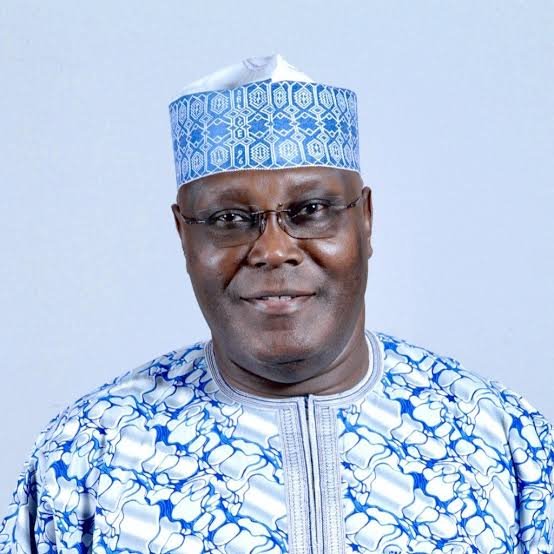
2027 ELECTIONS: WHY NIGERIANS MUST KEEP ATIKU AWAY FROM THE NATIONAL TREASURY
The media and public discourse have been awashe with damning reports of former Vice President Atiku Abubakar’s alleged dealings in local and international bribery and corruption schemes. Ghosts of his sordid past continue, restlessly, to haunt and warn that Atiku must never again be allowed anywhere close to such a commanding position of trust and responsibility as the presidency. As a former public official, Atiku’s record is an executive summary of some of Nigeria’s vilest episodes of corruption and cronyism that pulverised our economy and decimated public trust. Nigeria’s upcoming presidential election presents the electorate the opportunity to deal a final blow to Atiku’s desperate quest for presidential power and save the country from his ravenous plunder. From the Mambilla Hydroelectric Power Project and the Siemens bribery scandal to the William Jefferson case, the PTDF funds controversy, and the US […]
NECO releases 2026 SSCE results, 58.67% pass English, Mathematics
The National Examinations Council (NECO) has released the results of the 2026 Senior School Certificate Examination (SSCE) with 804,948 candidates, representing 58.67 per cent, obtaining five credits in English language and Mathematics. Dantani Wushishi, NECO registrar, announced the results in Minna, Niger state, on Thursday. Wushishi said 1,378,048 candidates registered for the examination, while 1,371,992 candidates sat for the exercise, which commenced on June 15 and ended on July 23, 2026. He disclosed that 1,162,118 candidates, representing 84.70 per cent, obtained five credits and above irrespective of their performance in english language and mathematics. The 2026 result records 2.64 percent drop in pass rate when compared with the 818,492 candidates representing 60.26 percent that obtained five credits and above, including english and mathematics in the 2025 examination. The NECO registrar said the 2026 examination recorded a 64.74 per cent drop […]

SAUDI ARABIA @ 96: NIGERIA REAFFIRMS COMMITMENT TO STRONGER BILATERAL RELATIONS – INFORMATION MINISTER
The Honourable Minister of Information and National Orientation, Mohammed Idris, has said Nigeria and Saudi Arabia are deepening their relationship beyond traditional ties, with greater cooperation in agriculture, energy, investment, aviation, financial technology and trade. Idris stated this on Wednesday in Abuja at a reception to mark the 96th National Day of the Kingdom of Saudi Arabia. “Today, our relationship is also taking on a broader economic and strategic dimension. Nigeria and Saudi Arabia have opportunities to deepen cooperation in areas such as agriculture, energy, investment, aviation, financial technology and trade. These are areas that can create practical benefits for both countries and strengthen our economic ties,” he said. The Minister said the longstanding relationship between both countries was built on history, faith, people-to-people connections and shared interests, noting that Nigerians have travelled to Saudi Arabia for pilgrimage, education, business […]

Tinubu, Fani-Kayode face $36m lawsuit over alleged death threats
A United States law firm working for former Vice President Atiku Abubakar, Von Batten Montague-York, has said it has been cleared and authorised to commence a $36 million federal lawsuit against President Bola Tinubu and former Minister of Aviation, Femi Fani-Kayode, in the United States. The firm disclosed this in a statement on Wednesday saying the suit would be filed before the United States District Court for the District of Columbia. Our correspondent in the US reported that the statement reads “We have been cleared and authorized to proceed with a $36 million federal lawsuit against Nigerian President Bola Tinubu (@OfficialABAT) and Ambassador Femi Fani-Kayode in the United States District Court for the District of Columbia.” The suit arises from threats of kidnap and physical harm to Dr Von Batten, made by Ambassador Fani-Kayode as part of the alleged […]

Tinubu Hails $800m Ima Gas FID As Nigeria Unlocks Gas Resources Trapped For 50 Years
President Bola Ahmed Tinubu welcomes the $800 million Final Investment Decision (FID) on the Ima Gas Project, marking another major milestone in his administration’s drive to unlock Nigeria’s vast gas resources for investment, industrialization, job creation and economic prosperity. Developed by Nigerian independent AMNI International in partnership with TotalEnergies, the Ima Gas Project is expected to produce about 300 million standard cubic feet of gas per day at peak. The Ima gas resource, located offshore in OMLs 112 and 117, was discovered in 1973 but remained undeveloped for more than five decades. Despite its significant reserves and potential as a source of feedgas for Nigeria LNG Limited, the resource remained underground and unable to contribute meaningfully to Nigeria’s economy. The FID, announced on September 23, has changed this. The Ima gas project marks the fourth major gas project to reach […]
Related
2027 ELECTIONS: WHY NIGERIANS MUST KEEP ATIKU AWAY FROM THE NATIONAL TREASURY
The media and public discourse have been awashe with damning reports of former Vice President Atiku Abubakar’s alleged dealings in local and international bribery and corruption schemes. Ghosts of his sordid past continue, restlessly, to haunt and warn that Atiku must never again be allowed anywhere close to such a commanding position of trust and responsibility as the presidency. As a former public official, Atiku’s record is an executive summary of some of Nigeria’s vilest episodes of corruption and cronyism that pulverised our economy and decimated public trust. Nigeria’s upcoming presidential election presents the electorate the opportunity to deal a final blow to Atiku’s desperate quest for presidential power and save the country from his ravenous plunder. From the Mambilla Hydroelectric Power Project and the Siemens bribery scandal to the William Jefferson case, the PTDF funds controversy, and the US […]
NECO releases 2026 SSCE results, 58.67% pass English, Mathematics
The National Examinations Council (NECO) has released the results of the 2026 Senior School Certificate Examination (SSCE) with 804,948 candidates, representing 58.67 per cent, obtaining five credits in English language and Mathematics. Dantani Wushishi, NECO registrar, announced the results in Minna, Niger state, on Thursday. Wushishi said 1,378,048 candidates registered for the examination, while 1,371,992 candidates sat for the exercise, which commenced on June 15 and ended on July 23, 2026. He disclosed that 1,162,118 candidates, representing 84.70 per cent, obtained five credits and above irrespective of their performance in english language and mathematics. The 2026 result records 2.64 percent drop in pass rate when compared with the 818,492 candidates representing 60.26 percent that obtained five credits and above, including english and mathematics in the 2025 examination. The NECO registrar said the 2026 examination recorded a 64.74 per cent drop […]
SAUDI ARABIA @ 96: NIGERIA REAFFIRMS COMMITMENT TO STRONGER BILATERAL RELATIONS – INFORMATION MINISTER
The Honourable Minister of Information and National Orientation, Mohammed Idris, has said Nigeria and Saudi Arabia are deepening their relationship beyond traditional ties, with greater cooperation in agriculture, energy, investment, aviation, financial technology and trade. Idris stated this on Wednesday in Abuja at a reception to mark the 96th National Day of the Kingdom of Saudi Arabia. “Today, our relationship is also taking on a broader economic and strategic dimension. Nigeria and Saudi Arabia have opportunities to deepen cooperation in areas such as agriculture, energy, investment, aviation, financial technology and trade. These are areas that can create practical benefits for both countries and strengthen our economic ties,” he said. The Minister said the longstanding relationship between both countries was built on history, faith, people-to-people connections and shared interests, noting that Nigerians have travelled to Saudi Arabia for pilgrimage, education, business […]
Tinubu, Fani-Kayode face $36m lawsuit over alleged death threats
A United States law firm working for former Vice President Atiku Abubakar, Von Batten Montague-York, has said it has been cleared and authorised to commence a $36 million federal lawsuit against President Bola Tinubu and former Minister of Aviation, Femi Fani-Kayode, in the United States. The firm disclosed this in a statement on Wednesday saying the suit would be filed before the United States District Court for the District of Columbia. Our correspondent in the US reported that the statement reads “We have been cleared and authorized to proceed with a $36 million federal lawsuit against Nigerian President Bola Tinubu (@OfficialABAT) and Ambassador Femi Fani-Kayode in the United States District Court for the District of Columbia.” The suit arises from threats of kidnap and physical harm to Dr Von Batten, made by Ambassador Fani-Kayode as part of the alleged […]
Tinubu Hails $800m Ima Gas FID As Nigeria Unlocks Gas Resources Trapped For 50 Years
President Bola Ahmed Tinubu welcomes the $800 million Final Investment Decision (FID) on the Ima Gas Project, marking another major milestone in his administration’s drive to unlock Nigeria’s vast gas resources for investment, industrialization, job creation and economic prosperity. Developed by Nigerian independent AMNI International in partnership with TotalEnergies, the Ima Gas Project is expected to produce about 300 million standard cubic feet of gas per day at peak. The Ima gas resource, located offshore in OMLs 112 and 117, was discovered in 1973 but remained undeveloped for more than five decades. Despite its significant reserves and potential as a source of feedgas for Nigeria LNG Limited, the resource remained underground and unable to contribute meaningfully to Nigeria’s economy. The FID, announced on September 23, has changed this. The Ima gas project marks the fourth major gas project to reach […]
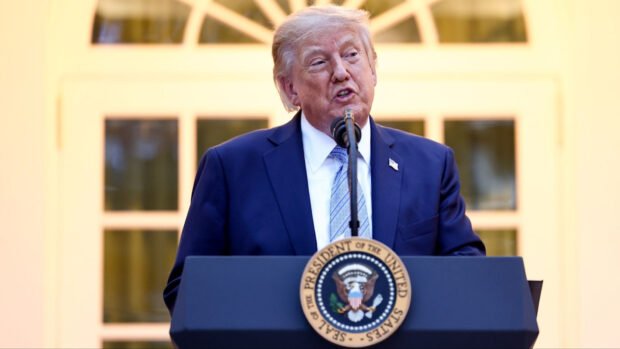
UNGA: Trump pledges ‘unmatched military might’ against drug cartels
President Trump Presented The Mexican Border Defense Medal At The White House WASHINGTON, DC. U.S. President Donald Trump spoke to reporters after a ceremony for the presentation of the Mexican Border Defense Medal in the Oval Office of the White House on December 15, 2025 in Washington, DC. During the ceremony, Trump recognized the first 13 service members to receive the recently established Mexican Border Defense Medal (MBDM), which recognizes service members supporting Customs and Border Protection on the U.S.-Mexico border. Anna Moneymaker/Getty Images/AFP (Photo by Anna Moneymaker / GETTY IMAGES NORTH AMERICA / Getty Images via AFP) President Donald Trump vowed on Tuesday to reassert US dominance in the Western Hemisphere and to use “unmatched military might” against threats in the region as he gathered allies behind an expanding campaign against drug cartels. Speaking to world leaders at the […]
Be the first to leave a comment