
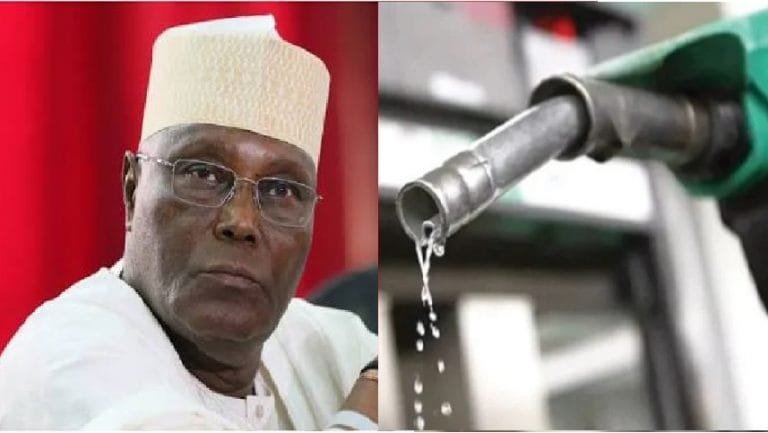

Presidential candidate of the African Democratic Congress (ADC) Atiku Abubakar, had promised to reinstate subsidy payment if elected in next year’s presidential election because, according to him, the money made from the removal of fuel subsidy has not been accounted for by the Tinubu administration.
President Bola Tinubu, in a response to the allegation, said it smacked of ignorance.
But Atiku insisted in a fresh statement yesterday that the federal government got it all wrong on its intervention in the oil sector.
The former vice president described his proposal as a “targeted, capped, budgeted, time-bound and independently audited production-support mechanism tied to domestic production and protected against arbitrage.”
Experts who bared their minds on the issue in different interviews with our reporters include the Chief Executive Officer, Economic Associates, Dr. Ayo Teriba; Managing Director, Arthur Steven Asset Management, Mr. Olatunde Amolegbe; Managing Director, HighCap Securities, Mr. David Adonri; former Registrar, Chartered Institute of Bankers of Nigeria (CIBN), Dr. Uju Ogubunka; Chief Economist at ARKK Economics and Data Limited, Dr. Samson Galadima Simon; Managing Director, Ambosit Capital Managers, Dr. Wahab Balogun; Dr. Yusha’u Aliyu of the Institute of Professional Economists and Policy Management; and a former Vice Chancellor of Crescent University, Abeokuta, Prof Sherrifdeen Tella.
They argued that savings from subsidy removal and other incremental incomes from government reforms should be channeled into critical infrastructural development, social welfares and institutional support systems for the needy and the vulnerable citizens.
Teriba, who said that the proposal to reverse subsidy removal was more political than economic, noted that politicians always appeal to their bases for electoral purposes by making populist statements that they will find difficult to implement.
According to him, reinstating subsidy on petrol will discourage investment and kill businesses in the oil and gas sector.
Teriba said that whatever the government policy is, it must ensure that prices are cost reflective to attract domestic and foreign investment.
He said the question should not be whether subsidy will be given or not.
“The reality is that subsidy will always be there. This government subsidizes CNG buses conversion, electric vehicles and education through soft loans. What I don’t subscribe to is price subsidy. I would prefer giving out coupons to the most vulnerable to enable them buy things that they need most,” Teriba said.
Amolegbe, a senior investment banker and former president of Chartered Institute of Stockbrokers (CIS), echoed the same sentiment, noting that the ship has already sailed on the subsidy issue and it is very unlikely to return for many reasons.
His words: “Firstly, our finances as a country cannot accommodate it. Secondly, we now have local refining capacity, so who will you be subsidising; a private enterprise? Thirdly, it will cause untold damage to the stable macroeconomic environment we have sacrificed to attain in the last few years.
“Finally, all it will do is to take us back to an era where funds that are supposed to be used to build much-needed infrastructure will end up being spent on wasteful subsidies.”
Adonri said reinstatement of petrol subsidy is not a viable and sustainable option.
“The economy has already adjusted to the new energy price level because of its flexibility. Reversal of the reform will conote policy inconsistency which is very injurious to economic stability,” he said.
“It will be ironic for a developing economy to subsidise consumption when domestic production of goods is financially hampered. Instead of consumption subsidy, Nigeria needs production subsidy for domestic creation of wealth and generation of direly needed productive employment.
“Should the reform policy be rolled back for political expediency, it will stifle the allocative efficiency of resources in the financial and energy sectors of the economy.
“Thinking about reinstatement of petrol subsidy ought to be treated as a monumental economic sabotage. The reform should continue with unrelenting intensity.”
Balogun said a permanent return to the old subsidy would be a poor economic choice because Nigeria has already experienced the enormous cost of keeping petrol prices below their economic value.
He noted that the combined cost of the former petrol subsidy and foreign-exchange subsidy was estimated at about five per cent of Gross Domestic Product (GDP) before the reforms, thus the scale of resources that had previously been absorbed by the subsidy system and could have been deployed to other national priorities.
“The government does not have free money,” Balogun said.
Continuing, he said every naira spent subsidising petrol represents money that cannot be spent elsewhere unless government raises additional revenue, cuts other expenditure or borrows.
The concern, according to him, becomes more serious because the government is already facing a high debt-servicing burden.
Balogun said borrowing money at high interest rates simply to keep petrol prices artificially low would offer short-term relief but could leave the country with a much larger financial burden in the future.
He, however, underlined the need to ensure the savings from subsidy removals translate into tangible improvements in ordinary people’s lives.
He admitted that the removal of petrol subsidy created a major shock that spread far beyond filling stations as higher petrol prices increased transportation costs and affected the movement of food, agricultural production, manufacturing and other economic activities.
“A reform cannot be judged only by whether it improves government finances. It must ultimately improve people’s lives,” Balogun said.
Simon recalled that many economists, as well as international financial institutions had supported subsidy removal because government was effectively paying a large part of the cost of petrol consumed by Nigerians.
He noted that the argument for removing the subsidy was that the money could instead be used to finance infrastructure, hospitals, schools, roads and other development needs.
He rejected a complete return to the former subsidy system, urging the government to direct part of the gains from subsidy removal towards the poorest Nigerians.
“What is fair is to channel the gains to the most vulnerable,” Simon said.
He suggested that government should develop a credible and transparent social protection system that identifies the poorest households and provides assistance to them.
Simon said such support should not become another avenue for political patronage or the distribution of money to favoured individuals.
According to him, government should have a reliable register of vulnerable Nigerians and gradually extend assistance to those at the bottom of the income ladder.
He pointed out that government should not expect market reforms alone to distribute economic gains to ordinary citizens.
Simon pointed to improvements in foreign exchange reserves, the capital market and other macroeconomic indicators, saying that although such developments could be beneficial to the economy, they were difficult for an average Nigerian to connect with his or her daily experience.
“What people need to see is food becoming more affordable and infrastructure improving,” he said.
He cited visible improvements such as better roads and public infrastructure as examples of government actions that citizens could directly associate with economic reforms.
For Aliyu, however, the proposed return to subsidy would be a major setback for the petroleum industry and could reverse investment gains made since subsidy removal.
He said the policy could discourage investors at a time when Nigeria needs more private capital in the petroleum sector.
“It was subsidy removal that brought Dangote Refinery,” Aliyu said, arguing that returning to the old subsidy model could weaken incentives for investment in domestic refining.
He also expressed concern that the planned initial public offering of Dangote Refinery could be affected if investors became uncertain about the future pricing structure of the petroleum market.
According to him, the country should focus on improving the efficiency of domestic refining and creating a market structure that allows local refineries to operate sustainably instead of relying on government subsidies.
“What brought about high prices, what brought about the cost-of-living crisis, what brought about inefficiency in government, is fuel subsidy,” he said.
Aliyu said the old subsidy regime created opportunities for corruption and encouraged practices that allowed government to pay for petroleum products that were allegedly not genuinely consumed.
He warned that returning to such a system could bring back the problems of corruption, inefficiency and weak investment. “Subsidy will remain counterproductive,” he said.
Rather than restore a broad subsidy, Aliyu proposed that Nigeria should make better use of its crude oil resources to supply domestic refineries.
He argued that the country should develop a pricing arrangement that allows domestic refineries to obtain Nigerian crude at a predictable price in naira and sell refined products at a transparent and sustainable domestic price.
According to him, Nigeria has crude oil and now has significant domestic refining capacity, meaning the country should concentrate on changing the way crude is supplied, refined and distributed.
“We have the crude oil. We have the working refinery, and we know our consumption level,” he said.
Aliyu said the objective should be to ensure that domestic refineries have adequate crude supply and that the pricing mechanism benefits Nigerian consumers without creating another expensive subsidy structure.
Asked about the socio-economic consequences of restoring subsidy, he predicted that it could lead to petrol shortages rather than solve the problem of high prices.
“The first implication will be there will be scarcity of this product,” he said.
He argued that the subsidy would not necessarily bring petrol prices down because shortages and market distortions could continue. “Nigerians will continue to pay higher prices, and inflation will surge,” he said.
Aliyu also warned that investors could postpone or abandon investment plans if the return of subsidy created uncertainty around the petroleum market.
He said this could affect the planned IPO of Dangote Refinery and weaken efforts to develop Nigeria’s domestic refining industry.
Ogubunka said Atiku “does not know whatever the impact of subsidy removal or return is.
“When we talk of the impact of subsidy removal on the masses, he may not be the right person to judge,” Ogubunka said.
He pointed out that economic statistics point to improvement on economic growth in post-subsidy era, adding that steps should now be taken to ensure that positive impact of the subsidy removal gets to the ordinary people.
He said that discussions on best ways to manage and support the masses should be held between the people and government.
Dr. Muda Yusuf said: “No, subsidy is not sustainable. He (Atiku) is just being populist. He is just playing to the gallery. That is what it is.”
He queried: “If you withdraw subsidy, how are you going to fund it? Where is the money to fund it? Then what signal are you sending to investors? Is it not the subsidy regime that killed all the refineries? How do you attract investors into the sector if you’re talking about subsidy?”
Accordingly, any plan to return subsidy will erode investors’ confidence in the economy, he said. “Investors will run away. We’re talking about attracting more investors into the refineries, especially to the downstream and all of that. It is a big distortional proposition.
“It is going to distort everything and scare investors away. In any case, we don’t even have the fiscal space to accommodate the subsidy. The current administration is still battling with the power sector subsidy, which is a lot. They’re struggling with it.”
Prof. Jonathan Aremu, a former Acting Assistant Director of Research and Planning at the Central Bank of Nigeria (CBN), expressed a similar opinion.
He said: “I’m so sad to hear that somebody who wants to be president said he would return the oil subsidy. Can he not see the roads, power challenge and health challenge? Why choose oil subsidy? Because there is so much scam in subsidy, so he wants the scam to come back?
“As an economist, I’m extremely very sad. Up till now, the scam that they discovered in the oil subsidy has not been resolved, and you want to go back? You see, the issue of price of fuel is as a result of our currency devaluation. In 1980, when I was at the CBN, N1 was equal to $7.5, which means N1 of today when you look at it is about N3,000 now.”
Aremu, a Professor of International Economic Relations and former acting vice chancellor of Covenant University (CU), Ota, said it was worrisome that someone of Atiku’s caliber could play politics with the issue of fuel subsidy.
“My worry is that a lot of people who have nothing to give for the economy and want to be president could say such a thing. For me, even saying that is enough to disqualify him. If people have nothing to say they better keep shut,” he said.
He added: “Nigeria’s economy is not the only one in the world. We should be able to see what the rest of the world is doing. Nobody is wasting his money on nonsense anymore. It is so unfortunate that he is the kind of character that wants to lead the country.”
Prof. Sherrifdeen Tella, an economist, said: “The nation has gone beyond the issue of subsidy, the environment has changed. Subsidy was based on the fact that we were importing a lot of fuel from abroad. Nobody should be talking about subsidy anymore. No.
“We have the Dangote Refinery, since our own local refineries are not working efficiently. What we should be concerned about is not how to return the subsidy unless we want to start encouraging corruption again.
“What we should be doing is to see how we can assist Dangote Refinery to get enough crude to be able to produce more since the capacity is high enough and be able to supply more to the economy and also assist other refineries that are coming up.
“You can give them credit or loan for them to be able to come up if they have capital constraints. We should encourage more refineries to come up so that we can address the monopoly by the Dangote Refinery.”
Tella said the ills associated with subsidy regime were so damaging that it would be grossly insensitive to return to them.
“I have seen that the removal of oil subsidy has actually brought lots of revenue to all tiers of government which according to the Finance Minister has been distributed evenly.
“Whether they use it properly is a different thing. But nobody should think of returning the subsidy for whatever reason. I think it was wrong for Atiku to be talking about returning oil subsidy. We have gone beyond that,” he stressed.
Removing subsidy was difficult but necessary, Alfindiki replies Atiku
A chieftain of the All Progressives Congress, (APC) Alhaji Faizu Alfindiki dismissed former Vice President Atiku Abubakar’s pledge to restore petrol subsidy, describing it as inconsistent with Nigeria’s economic realities.
In a statement issued in Kano yesterday, Alfindiki said the debate should focus on accountability for subsidy savings, not a return to a regime he called financially unsustainable.
Alfindiki, a former Chairman of Kano Municipal Local Government, said the subsidy had placed enormous pressure on public finances and distorted the petroleum market.
“It is legitimate to question how government revenues are being managed, but it is equally important to acknowledge the economic consequences of returning to a subsidy regime.
“Nigerians deserve solutions that are sustainable, not policies designed primarily to win political arguments,” he said.
He added that removing the subsidy was a “difficult but necessary decision” that must be matched with measures to protect vulnerable citizens and boost domestic production.
The APC chieftain questioned Atiku’s reversal, noting that during the 2023 campaign, the former VP had promised to remove the subsidy within his first 100 days in office.
“Today, Atiku is presenting subsidy restoration as a solution, whereas his position before the 2023 election was that subsidy should be removed. Nigerians are entitled to ask what has changed and why,” Alfindiki said.
Why subsidy must return, by Atiku
Atiku yesterday rejected President Bola Tinubu’s attack on his planned fuel subsidy restoration.
He said the President’s attack was an “insolent sermon of a failed economic experimenter who mistakes Nigerians’ capacity to endure suffering for evidence that his policies are working.”
He wondered why President Tinubu should call anyone economically ignorant after “presiding over an economy where government revenues have ballooned while citizens’ purchasing power has collapsed.”
He said: “Here is an administration that detonated simultaneous fuel-price, exchange-rate and cost-of-living shocks across a fragile economy, watched millions become poorer, and now struts around Abuja demanding applause for the wreckage.
“That is not reform. It is economic arson followed by propaganda about the ashes.
“Tinubu’s courtiers may clap because FAAC allocations have increased, but hungry Nigerians cannot boil FAAC figures for dinner. Businesses cannot power factories with presidential speeches, workers cannot pay transport fares with macroeconomic grammar, and parents cannot settle school fees with statistics manufactured for State House applause.”
Atiku, in the statement signed by his Senior Special Assistant on Public Communication, Phrank Shaibu, said his new stance on fuel subsidy is not inconsistency but economics.
His words: “That is not inconsistency. That is economics. Only incompetence insists on yesterday’s prescription after today’s conditions have changed.
“Atiku is not proposing the resurrection of the corrupt, open-ended subsidy bazaar. He proposes a targeted, capped, budgeted, time-bound and independently audited production-support mechanism tied to domestic production and protected against arbitrage.
“The difference is simple: Tinubu pronounced first and searched for a plan afterwards. Atiku studied the consequences and produced a solution.
Atiku said his Economic Recovery Plan (AERP) “recognises that the choice before Nigeria is not simply between subsidy and no subsidy, but between an opaque intervention that breeds waste and a disciplined economic instrument that delivers measurable benefits to citizens.
“My proposal is not to resurrect the old subsidy regime. We will move subsidy from importation to production, from middlemen to Nigerian refineries, and from unverifiable claims to verifiable barrels.
“The principle is simple: the subsidy will follow the barrel.”
Under the AERP, qualifying public and private Nigerian refineries would receive domestic crude at a preferential price, subject to strict production, efficiency, transparency and domestic-supply conditions.
The presidency, in its initial response to Atiku, said his plan was propelled by his desperation for power.
It said Atiku, who had campaigned for the elimination of petrol subsidy ahead of the 2023 general election, had now reversed himself by promising to reinstate a system he once acknowledged should be abolished.
According to the Special Adviser to the President on Information and Strategy, Bayo Onanuga, Atiku’s change of position was driven by political expediency rather than sound economic considerations, arguing that the former Vice President was making a promise he should know was fiscally unsustainable and contrary to Nigeria’s current petroleum-sector realities.
“It is not difficult to explain why Atiku has latched onto the abandoned subsidy regime, five months to the election. Desperate for power, he needed to make a promise that he knew, if he were candid with our people, does not make fiscal sense, is retrogressive, and is against the genuine interest of the people,” Onanuga said.
He accused the former VP of opportunistically recanting what had been a major plank of his economic programme, rather than presenting what it called a creative alternative to the policies of the President Bola Tinubu administration.
About the author


Rwanda vs Nigeria: Chelle reignites the Super Eagles’ aspirations for the 2026 World Cup in Kigali.
On Friday, Eric Chelle became the inaugural non-Nigerian African coach to take the helm of the Super Eagles. The Malian coach directed his first match, resulting in a 2-0 win against Rwanda during a qualifying round for the 2026 World Cup. Chelle's appointment by the Nigeria Football Federation (NFF) took place on January 7, as he replaced Finidi George and succeeded interim coach Augustine Eguavoen. Since that time, he has dedicated three months to traveling across Nigeria, observing domestic league matches, and engaging with his players based in Europe. However, his initial team selection remained perplexing. Chelle opted for a highly offensive formation in Kigali, which appeared unbalanced on paper. Victor Osimhen, Samuel Chukwueze, Ademola Lookman, and Moses Simon were all included in the attacking lineup, while Alex Iwobi and Wilfred Ndidi occupied the midfield positions. "I had mixed feelings. […]
Outrage over Atiku’s plan to restore fuel subsidy
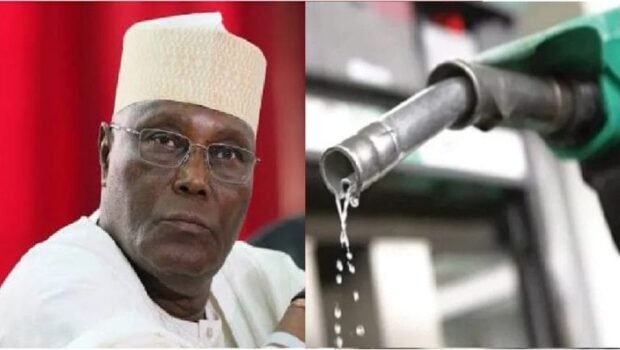
Presidential candidate of the African Democratic Congress (ADC) Atiku Abubakar, had promised to reinstate subsidy payment if elected in next year’s presidential election because, according to him, the money made from the removal of fuel subsidy has not been accounted for by the Tinubu administration. President Bola Tinubu, in a response to the allegation, said it smacked of ignorance. But Atiku insisted in a fresh statement yesterday that the federal government got it all wrong on its intervention in the oil sector. The former vice president described his proposal as a “targeted, capped, budgeted, time-bound and independently audited production-support mechanism tied to domestic production and protected against arbitrage.” Experts who bared their minds on the issue in different interviews with our reporters include the Chief Executive Officer, Economic Associates, Dr. Ayo Teriba; Managing Director, Arthur Steven Asset Management, Mr. Olatunde […]

PRESIDENT TINUBU CONDOLES WITH PEOPLE OF SOKOTO OVER BOAT ACCIDENT
President Bola Ahmed Tinubu has expressed deep sorrow over the boat accident in Gorau Community of Goronyo Local Government Area of Sokoto State, which claimed many lives and left others missing. The President described the incident as a tragedy and extended his heartfelt condolences to the families of the victims, the government and people of Sokoto State. “The news of this boat mishap deeply saddens by me. My thoughts and prayers are with the bereaved families during this difficult time. I pray that God grants the departed souls eternal rest and gives their loved ones the strength to bear this irreparable loss,” the President said. President Tinubu also commended emergency responders and local authorities for their swift rescue and recovery efforts. He directed relevant federal agencies, including the National Inland Waterways Authority and NEMA, to work closely with the Sokoto […]
Fake agency: Tinubu suspends three Permanent Secretaries
President Bola Tinubu has ordered the immediate arrest of Prince George Buchi Nwabueze over his alleged involvement in operating a fake government agency within the Office of the Secretary to the Government of the Federation. The President also ordered the immediate suspension of three permanent secretaries. The are M.S. Danjuma, Nadungu Gagare, and Richard P. Pheelangwah over the discovery of the fake agency. The Independent Corrupt Practices and Other Related Offences Commission (ICPC) Chairman, Musa Aliyu, disclosed the President’s directives on Friday, 21/8/26 while briefing State House correspondents after meeting with Tinubu at the Presidential Villa in Abuja. Our correspondent in the state house reported that Aliyu said the commission uncovered a purported agency operating under the name “National Brands Development and Made in Nigeria Special Project Office”. The office had allegedly been allocated space within the premises of the […]

Gunmen ambush, kill two Amotekun operatives in Ondo
The Ondo State Amotekun Corps has confirmed that two of its operatives were killed by armed men in an ambush at Ago-oyinbo farming area, Ala Daadaa, Akure North Local Government of the state. This is contained in a statement issued by the spokesperson for the Corps in the state, S.A. Jimoh Adeniken, on Friday in Akure. The statement reads: “The Ondo State Security Network Agency, Amotekun Corps regrets to announce the tragic loss of two of its gallant officers who paid the ultimate price in the line of duty following an ambushed attack by suspected criminal elements. “The incident occurred on 11th of August 2026, while the officers were coming out of their base along Ago-oyinbo farming area, around Ala Daadaa, of Akure North Local Government of the State. “The officers came under sudden attack by assailants, who engaged them […]
Eid el-Maulud: FG declares Tuesday public holiday
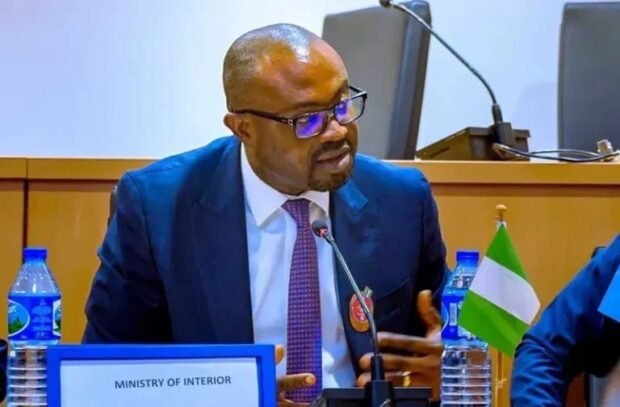
The Federal Government has declared Tuesday, August 25, 2026, a public holiday to mark this year’s Eid el-Maulud, commemorating the birth of Prophet Muhammad (Peace Be Upon Him). The Minister of Interior, Olubunmi Tunji-Ojo, made announcement on behalf of the Federal Government in a statement on Friday. The statement was signed by the Permanent Secretary of the Ministry of Interior, Dr Magdalene Ajani. Tunji-Ojo urged Nigerians to use the occasion to reflect on the values associated with the life and teachings of the Prophet. “Every Eid ul Maulud gives us reason to pause and draw lessons from a life defined by compassion, humility and service to others. “These are qualities our nation needs now more than ever, and I encourage every Nigerian, not just our Muslim brothers and sisters, to reflect on them,” he said. The minister urged Nigerians to […]
40 feared dead as boat carrying farmers capsizes
About 40 people are feared dead after a boat carrying farmers and farm labourers capsized in Gorau town, Goronyo Local Government Area of Sokoto State. The boat was carrying farmers and farm labourers who were crossing a stream to access their rice farms, when it capsized on Thursday. Most of those on board were reportedly children aged between 10 and 15 years. Sources said more than 70 people were on the boat when it capsized shortly after take-off. The village head was among those on board but was reportedly rescued alongside five others. “So far, we have recovered about 40 bodies, while six people, including the village head, were rescued,” Sharhabilu Yahuza Kiliya, a local journalist who was at the scene said. The victims were said to comprise farm owners and labourers who had been engaged to harvest rice. “The […]
Related
PRESIDENT TINUBU CONDOLES WITH PEOPLE OF SOKOTO OVER BOAT ACCIDENT
President Bola Ahmed Tinubu has expressed deep sorrow over the boat accident in Gorau Community of Goronyo Local Government Area of Sokoto State, which claimed many lives and left others missing. The President described the incident as a tragedy and extended his heartfelt condolences to the families of the victims, the government and people of Sokoto State. “The news of this boat mishap deeply saddens by me. My thoughts and prayers are with the bereaved families during this difficult time. I pray that God grants the departed souls eternal rest and gives their loved ones the strength to bear this irreparable loss,” the President said. President Tinubu also commended emergency responders and local authorities for their swift rescue and recovery efforts. He directed relevant federal agencies, including the National Inland Waterways Authority and NEMA, to work closely with the Sokoto […]
Fake agency: Tinubu suspends three Permanent Secretaries
President Bola Tinubu has ordered the immediate arrest of Prince George Buchi Nwabueze over his alleged involvement in operating a fake government agency within the Office of the Secretary to the Government of the Federation. The President also ordered the immediate suspension of three permanent secretaries. The are M.S. Danjuma, Nadungu Gagare, and Richard P. Pheelangwah over the discovery of the fake agency. The Independent Corrupt Practices and Other Related Offences Commission (ICPC) Chairman, Musa Aliyu, disclosed the President’s directives on Friday, 21/8/26 while briefing State House correspondents after meeting with Tinubu at the Presidential Villa in Abuja. Our correspondent in the state house reported that Aliyu said the commission uncovered a purported agency operating under the name “National Brands Development and Made in Nigeria Special Project Office”. The office had allegedly been allocated space within the premises of the […]
Gunmen ambush, kill two Amotekun operatives in Ondo
The Ondo State Amotekun Corps has confirmed that two of its operatives were killed by armed men in an ambush at Ago-oyinbo farming area, Ala Daadaa, Akure North Local Government of the state. This is contained in a statement issued by the spokesperson for the Corps in the state, S.A. Jimoh Adeniken, on Friday in Akure. The statement reads: “The Ondo State Security Network Agency, Amotekun Corps regrets to announce the tragic loss of two of its gallant officers who paid the ultimate price in the line of duty following an ambushed attack by suspected criminal elements. “The incident occurred on 11th of August 2026, while the officers were coming out of their base along Ago-oyinbo farming area, around Ala Daadaa, of Akure North Local Government of the State. “The officers came under sudden attack by assailants, who engaged them […]
Eid el-Maulud: FG declares Tuesday public holiday
The Federal Government has declared Tuesday, August 25, 2026, a public holiday to mark this year’s Eid el-Maulud, commemorating the birth of Prophet Muhammad (Peace Be Upon Him). The Minister of Interior, Olubunmi Tunji-Ojo, made announcement on behalf of the Federal Government in a statement on Friday. The statement was signed by the Permanent Secretary of the Ministry of Interior, Dr Magdalene Ajani. Tunji-Ojo urged Nigerians to use the occasion to reflect on the values associated with the life and teachings of the Prophet. “Every Eid ul Maulud gives us reason to pause and draw lessons from a life defined by compassion, humility and service to others. “These are qualities our nation needs now more than ever, and I encourage every Nigerian, not just our Muslim brothers and sisters, to reflect on them,” he said. The minister urged Nigerians to […]
40 feared dead as boat carrying farmers capsizes
About 40 people are feared dead after a boat carrying farmers and farm labourers capsized in Gorau town, Goronyo Local Government Area of Sokoto State. The boat was carrying farmers and farm labourers who were crossing a stream to access their rice farms, when it capsized on Thursday. Most of those on board were reportedly children aged between 10 and 15 years. Sources said more than 70 people were on the boat when it capsized shortly after take-off. The village head was among those on board but was reportedly rescued alongside five others. “So far, we have recovered about 40 bodies, while six people, including the village head, were rescued,” Sharhabilu Yahuza Kiliya, a local journalist who was at the scene said. The victims were said to comprise farm owners and labourers who had been engaged to harvest rice. “The […]
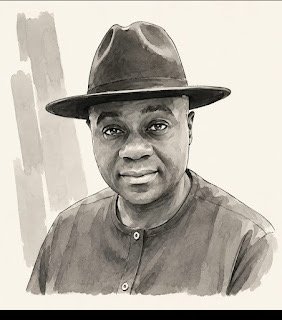
PRESIDENT TINUBU APPOINTS ABEL OLUMUYIWA ENITAN AS HEAD OF THE CIVIL SERVICE OF THE FEDERATION
President Bola Ahmed Tinubu has appointed Mr Abel Olumuyiwa Enitan as the Head of the Civil Service of the Federation, effective August 27, 2026. Mr Enitan succeeds Mrs Didi Esther Walson-Jack, who will retire soon from the Federal Civil Service upon attaining the statutory retirement age of 60. Mr Enitan, from Osun State, is the most senior Permanent Secretary in the Federal Civil Service. He has served as Permanent Secretary for seven years and seven months, working at the Ministry of Police Affairs, the Ministry of Humanitarian Affairs, and the Office of the Vice President. He is currently the Permanent Secretary in the Federal Ministry of Education. He brings considerable institutional experience and a deep understanding of how the Federal Civil Service works to his new responsibility. President Tinubu expresses his profound appreciation to Mrs Walson-Jack for her distinguished service […]
Be the first to leave a comment