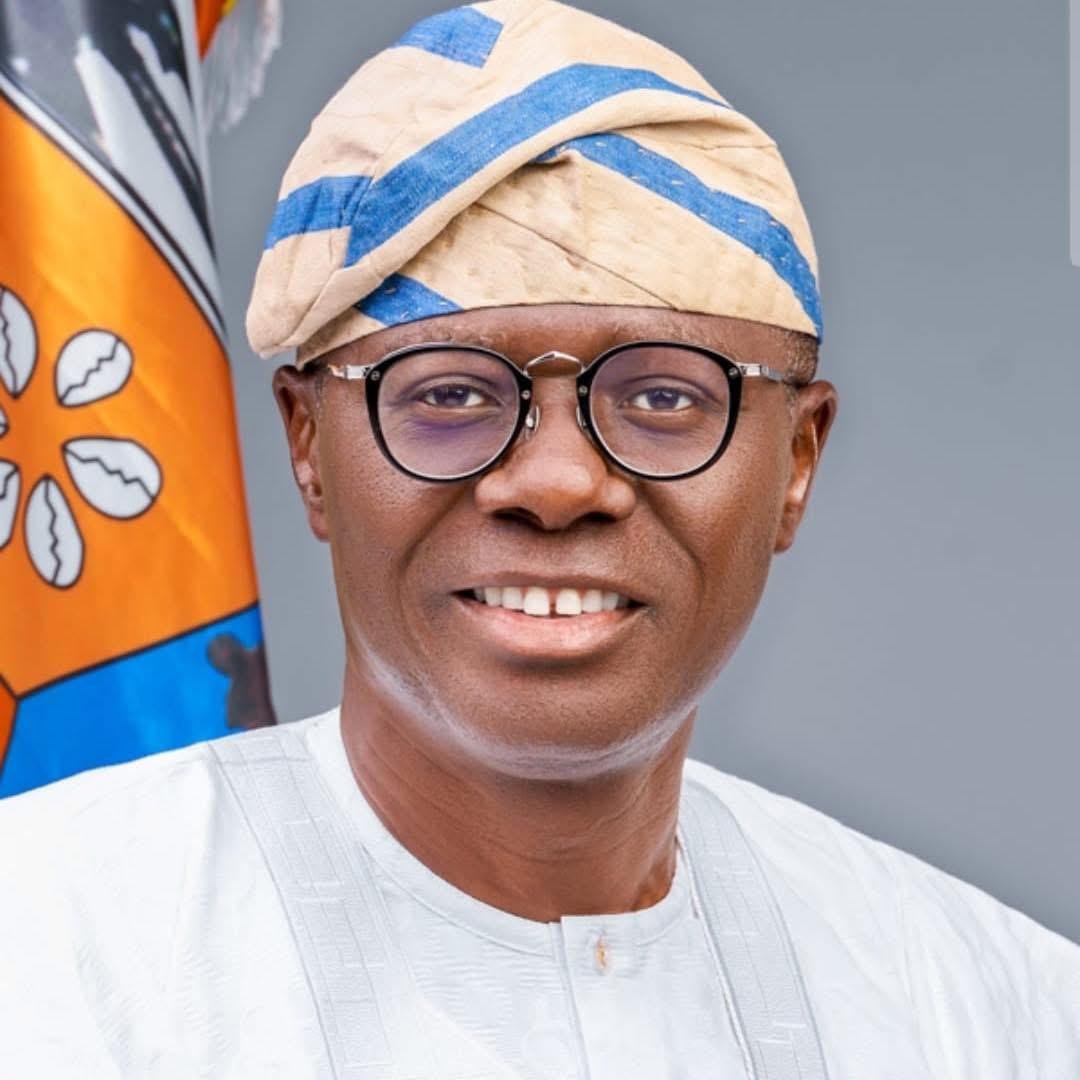

Lagos State Governor, Babajide Sanwo-Olu, has described promises by politicians to restore Nigeria’s fuel subsidy as unrealistic campaign rhetoric that could mislead Nigerians ahead of the 2027 elections.
Sanwo-Olu made the remarks while delivering the 7th Freedom Online Newspaper Lecture in Lagos, themed, “2027 Elections, Economy, Security and Nigeria’s Future.”
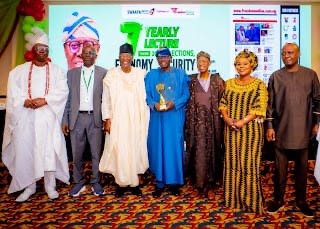
The event, held at the Sheraton Lagos Hotel in Ikeja, was chaired by former Minister of Information and Culture, Lai Mohammed, while former Ogun State Governor and serving Senator, Gbenga Daniel, attended as the Special Guest of Honour.
Speaking on the country’s economic reforms, Sanwo-Olu defended President Bola Tinubu’s decision to remove the fuel subsidy, arguing that the policy had become a major drain on government finances.
According to him, the subsidy was originally introduced to address weaknesses in domestic fuel supply but eventually became a financial burden that diverted funds that could have been used for infrastructure, healthcare and education.
The governor acknowledged that subsidy removal had caused hardship for Nigerians, particularly through higher fuel and food prices. However, he maintained that the reform was necessary to put the economy on a more sustainable path.
Sanwo-Olu said politicians promising to bring back the subsidy should be questioned about how they intend to finance such a policy.
He argued that with presidential campaigns gradually gathering momentum, Nigerians should expect more promises that government revenues may not be able to support.
The Lagos governor also highlighted what he described as improvements in the economy under the Tinubu administration, including increased revenue sharing to states and local governments, stronger external reserves, declining inflation and improved economic growth.
He said Nigeria’s economy recorded growth across key sectors, including agriculture and services, while remittances from Nigerians abroad also reached a record monthly level through formal channels.
Sanwo-Olu further defended the government’s approach to security, saying poverty and unemployment remained major drivers of insecurity.
He cited various government interventions targeting young Nigerians, including student financing, technical skills development, youth enterprise programmes and employment initiatives.
On democracy and the 2027 elections, the governor said Nigeria’s electoral system had continued to improve, pointing to recent reforms and the increased use of technology in voter verification and result transmission.
He urged the Independent National Electoral Commission to ensure it is fully prepared for the 2027 elections and called on Nigerians to support efforts aimed at strengthening the electoral process.
Former Information Minister Lai Mohammed, who chaired the event, also stressed the connection between economic inclusion, security and political stability.
He argued that young Nigerians who have access to jobs and opportunities are less vulnerable to political manipulation and electoral violence.
According to him, the 2027 election should not be viewed solely as a contest for political power but as an opportunity to strengthen institutions, attract investment and promote national development.
The convener of the lecture and Editor-in-Chief of Freedom Online, Gabriel Akinadewo, said the event was organised at a time of renewed political activities across the country.
He called on politicians to prioritise national development over political interests and urged lawmakers to modernise outdated Nigerian laws to reflect present-day realities.
The lecture ended with renewed calls for political stability, economic reforms, stronger institutions and a more sustainable approach to Nigeria’s development ahead of the 2027 elections.
About the author

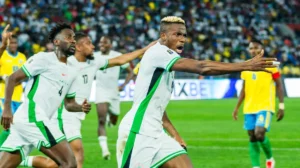
Rwanda vs Nigeria: Chelle reignites the Super Eagles’ aspirations for the 2026 World Cup in Kigali.
On Friday, Eric Chelle became the inaugural non-Nigerian African coach to take the helm of the Super Eagles. The Malian coach directed his first match, resulting in a 2-0 win against Rwanda during a qualifying round for the 2026 World Cup. Chelle's appointment by the Nigeria Football Federation (NFF) took place on January 7, as he replaced Finidi George and succeeded interim coach Augustine Eguavoen. Since that time, he has dedicated three months to traveling across Nigeria, observing domestic league matches, and engaging with his players based in Europe. However, his initial team selection remained perplexing. Chelle opted for a highly offensive formation in Kigali, which appeared unbalanced on paper. Victor Osimhen, Samuel Chukwueze, Ademola Lookman, and Moses Simon were all included in the attacking lineup, while Alex Iwobi and Wilfred Ndidi occupied the midfield positions. "I had mixed feelings. […]
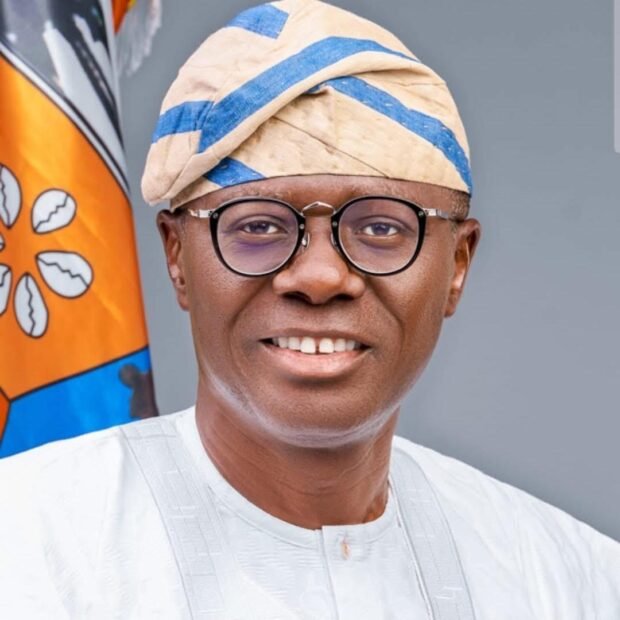
2027 ELECTION: PROMISES TO RESTORE FUEL SUBSIDY ARE EMPTY CAMPAIGN BUZZ – SANWO-OLU
Lagos State Governor, Babajide Sanwo-Olu, has described promises by politicians to restore Nigeria’s fuel subsidy as unrealistic campaign rhetoric that could mislead Nigerians ahead of the 2027 elections. Sanwo-Olu made the remarks while delivering the 7th Freedom Online Newspaper Lecture in Lagos, themed, “2027 Elections, Economy, Security and Nigeria’s Future.” The event, held at the Sheraton Lagos Hotel in Ikeja, was chaired by former Minister of Information and Culture, Lai Mohammed, while former Ogun State Governor and serving Senator, Gbenga Daniel, attended as the Special Guest of Honour. Speaking on the country’s economic reforms, Sanwo-Olu defended President Bola Tinubu’s decision to remove the fuel subsidy, arguing that the policy had become a major drain on government finances. According to him, the subsidy was originally introduced to address weaknesses in domestic fuel supply but eventually became a financial burden that diverted […]
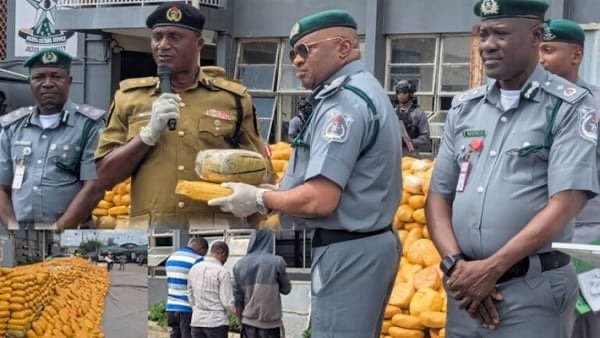
Customs hands over N3.95b seized drugs to NDLEA
The Nigeria Customs Service (NCS), Federal Operations Unit, Zone ‘A’, has handed over narcotic drugs and pharmaceutical products worth N3.95 billion to the National Drug Law Enforcement Agency (NDLEA) for investigation and prosecution. The items, intercepted during anti-smuggling operations along border corridors, highways and other strategic locations within the zone, included 3,116.9kg of synthetic strain of cannabis sativa in 5,669 parcels and 19 sacks. Also seized were cannabis, including 3.45kg of grinded cannabis (Skunk), 1kg and 0.35kg of granulated cannabis, as well as 26.1kg of cannabis in 49 wraps. Customs also intercepted a wrap of crystal methamphetamine weighing 0.35kg and 24 packets of Backwoods Russian Cream cigars. The Comptroller of the Federal Operations Unit, Zone ‘A’, Gambo Aliyu, who made this known during the handover of the items, said the seizures were part of sustained operations against drug trafficking syndicates […]
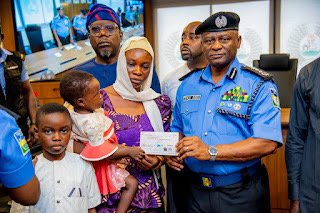
IGP DISU PRESENTS ₦2.32BN WELFARE BENEFITS TO FAMILIES OF FALLEN POLICE OFFICERS
The Inspector-General of Police, IGP Olatunji Rilwan Disu, psc(+), NPM, on Thursday, 3rd September 2026, presented cheques totalling ₦2,317,177,094.00 to 2,971 beneficiaries and next-of-kin of deceased Police Officers under the Group Life Assurance, Group Personal Accident and IGP Family Welfare Schemes. The beneficiaries comprise families of Police Officers who died in service and are covered under the 2017/2018, 2018/2019, 2020/2021, 2021/2022, 2022/2023 and 2024/2025 insurance policy years. The payments also include outstanding balances recovered from insurance companies following earlier partial settlements. Speaking at the presentation, the IGP described the exercise as more than the disbursement of financial benefits, noting that it represents the institutional responsibility owed to families of officers who made the ultimate sacrifice in service to Nigeria. He stressed that while no financial benefit can replace a lost loved one, the payments provide practical support and reaffirm the […]
Adekunle Ajasin varsity students protest over ASUU, NASU strike
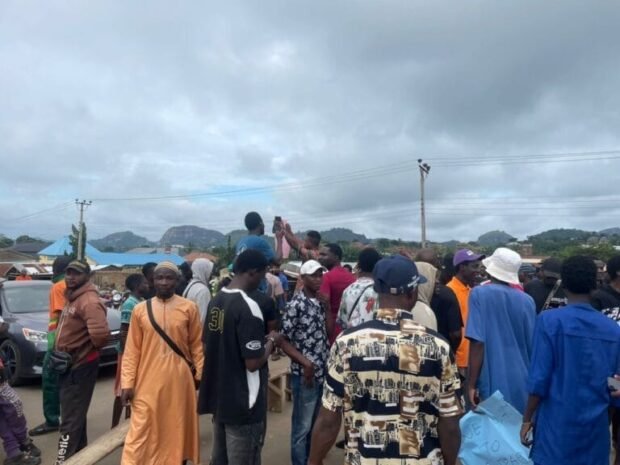
The students of Adekunle Ajasin University, Akungba-Akoko (AAUA), Ondo State, on Thursday took to the streets demanding an end to the ongoing industrial action by the workers of the institution. The peaceful protest followed an industrial action by the university-based unions, including the Academic Staff Union of Universities (ASUU); Senior Staff Association of Nigerian Universities (SSANU); the Non-Academic Staff Union (NASU); and the National Association of Academic Technologists (NAAT). Students took their protest to the university’s main gate and adjoining roads linking the institution to the major highway in Akungba-Akoko, displaying placards and demanding an end to the crisis. Speaking, the President of the Students’ Union Government, Folagbade Ayoola, said students were compelled to protest by the uncertainty created by the prolonged disruption of academic activities. Ayoola said the Ondo State Government needed to intervene immediately, alleging that issues including […]
Ondo varsities workers begin indefinite strike, say Aiyedatiwa released August subventions without 60% increment
Workers in the three state-owned universities in Ondo State have declared an indefinite strike following the failure of the state government to release promised funding increases and pay outstanding allowances. The industrial action will take effect from midnight on Wednesday, September 2, 2026, after the expiration of a 14-day ultimatum issued to the state government by the Joint Action Committee of Ondo State-Owned Tertiary Institutions (JAC-ODSTI). The affected institutions are Adekunle Ajasin University, Akungba-Akoko(AAUA); Olusegun Agagu University of Science and Technology, (OAUSTECH), Okitipupa; and the University of Medical Sciences, (UNIMED), Ondo. The unions involved are the Senior Staff Association of Nigerian Universities (SSANU), the Non-Academic Staff Union (NASU) and the National Association of Academic Technologists (NAAT). The unions made this known in a statement issued on Tuesday by the JAC-ODSTI Chairman, Comrade Tayo Ogungbeni, and Secretary, Comrade Kunle Akinwonmi. The […]
President Bola Tinubu Welcomes Release of 15 Abducted Corp Members and Others in Kogi State
President Bola Ahmed Tinubu has raised encomiums on the security personnel who carried out operations that lead to the release of the 15 abducted Corp members and others in Kogi state last week when he said; "I am delighted to receive the news that the fifteen members of the National Youth Service Corps and six other innocent and law-abiding Nigerians abducted last week in Kogi State by some criminal elements have regained their freedom. "The well-coordinated Search and Rescue (SAR) operation carried out by a combined team of personnel of the military, the Nigerian Police Force, the Department of State Services, and local vigilantes safely rescued all twenty-one abductees, made up of eight males and thirteen females, from the den of kidnappers in the forests of Ofu Local Government Area of Kogi State this afternoon. The corps members and other […]
Related
Customs hands over N3.95b seized drugs to NDLEA
The Nigeria Customs Service (NCS), Federal Operations Unit, Zone ‘A’, has handed over narcotic drugs and pharmaceutical products worth N3.95 billion to the National Drug Law Enforcement Agency (NDLEA) for investigation and prosecution. The items, intercepted during anti-smuggling operations along border corridors, highways and other strategic locations within the zone, included 3,116.9kg of synthetic strain of cannabis sativa in 5,669 parcels and 19 sacks. Also seized were cannabis, including 3.45kg of grinded cannabis (Skunk), 1kg and 0.35kg of granulated cannabis, as well as 26.1kg of cannabis in 49 wraps. Customs also intercepted a wrap of crystal methamphetamine weighing 0.35kg and 24 packets of Backwoods Russian Cream cigars. The Comptroller of the Federal Operations Unit, Zone ‘A’, Gambo Aliyu, who made this known during the handover of the items, said the seizures were part of sustained operations against drug trafficking syndicates […]
IGP DISU PRESENTS ₦2.32BN WELFARE BENEFITS TO FAMILIES OF FALLEN POLICE OFFICERS
The Inspector-General of Police, IGP Olatunji Rilwan Disu, psc(+), NPM, on Thursday, 3rd September 2026, presented cheques totalling ₦2,317,177,094.00 to 2,971 beneficiaries and next-of-kin of deceased Police Officers under the Group Life Assurance, Group Personal Accident and IGP Family Welfare Schemes. The beneficiaries comprise families of Police Officers who died in service and are covered under the 2017/2018, 2018/2019, 2020/2021, 2021/2022, 2022/2023 and 2024/2025 insurance policy years. The payments also include outstanding balances recovered from insurance companies following earlier partial settlements. Speaking at the presentation, the IGP described the exercise as more than the disbursement of financial benefits, noting that it represents the institutional responsibility owed to families of officers who made the ultimate sacrifice in service to Nigeria. He stressed that while no financial benefit can replace a lost loved one, the payments provide practical support and reaffirm the […]
Adekunle Ajasin varsity students protest over ASUU, NASU strike
The students of Adekunle Ajasin University, Akungba-Akoko (AAUA), Ondo State, on Thursday took to the streets demanding an end to the ongoing industrial action by the workers of the institution. The peaceful protest followed an industrial action by the university-based unions, including the Academic Staff Union of Universities (ASUU); Senior Staff Association of Nigerian Universities (SSANU); the Non-Academic Staff Union (NASU); and the National Association of Academic Technologists (NAAT). Students took their protest to the university’s main gate and adjoining roads linking the institution to the major highway in Akungba-Akoko, displaying placards and demanding an end to the crisis. Speaking, the President of the Students’ Union Government, Folagbade Ayoola, said students were compelled to protest by the uncertainty created by the prolonged disruption of academic activities. Ayoola said the Ondo State Government needed to intervene immediately, alleging that issues including […]
Ondo varsities workers begin indefinite strike, say Aiyedatiwa released August subventions without 60% increment
Workers in the three state-owned universities in Ondo State have declared an indefinite strike following the failure of the state government to release promised funding increases and pay outstanding allowances. The industrial action will take effect from midnight on Wednesday, September 2, 2026, after the expiration of a 14-day ultimatum issued to the state government by the Joint Action Committee of Ondo State-Owned Tertiary Institutions (JAC-ODSTI). The affected institutions are Adekunle Ajasin University, Akungba-Akoko(AAUA); Olusegun Agagu University of Science and Technology, (OAUSTECH), Okitipupa; and the University of Medical Sciences, (UNIMED), Ondo. The unions involved are the Senior Staff Association of Nigerian Universities (SSANU), the Non-Academic Staff Union (NASU) and the National Association of Academic Technologists (NAAT). The unions made this known in a statement issued on Tuesday by the JAC-ODSTI Chairman, Comrade Tayo Ogungbeni, and Secretary, Comrade Kunle Akinwonmi. The […]
President Bola Tinubu Welcomes Release of 15 Abducted Corp Members and Others in Kogi State
President Bola Ahmed Tinubu has raised encomiums on the security personnel who carried out operations that lead to the release of the 15 abducted Corp members and others in Kogi state last week when he said; "I am delighted to receive the news that the fifteen members of the National Youth Service Corps and six other innocent and law-abiding Nigerians abducted last week in Kogi State by some criminal elements have regained their freedom. "The well-coordinated Search and Rescue (SAR) operation carried out by a combined team of personnel of the military, the Nigerian Police Force, the Department of State Services, and local vigilantes safely rescued all twenty-one abductees, made up of eight males and thirteen females, from the den of kidnappers in the forests of Ofu Local Government Area of Kogi State this afternoon. The corps members and other […]

Three siblings die as boat capsizes in Kano
Three siblings die as boat capsizes in Kano Three siblings have lost their lives after a boat capsized at Tiga Dam in Tudunwada Local Government Area of Kano State. Our correspondent in Kano reports that the deceased were identified as Murjanatu, Atikatu and Bilkisu, popularly known as Amira, all from the Yalwan Rugu-Rugu community. The tragedy reportedly occurred at about 2:00 p.m. on Saturday when the canoe carrying the three girls overturned on the dam. The Chairperson of Tudunwada Local Government Area, Hajiya Sa’adatu Salisu Soja, confirmed the incident in a condolence message shared on her verified social media handles. Sa’adatu expressed her condolences to the people of Yalwan Rugu-Rugu, particularly the families of the deceased.
Be the first to leave a comment