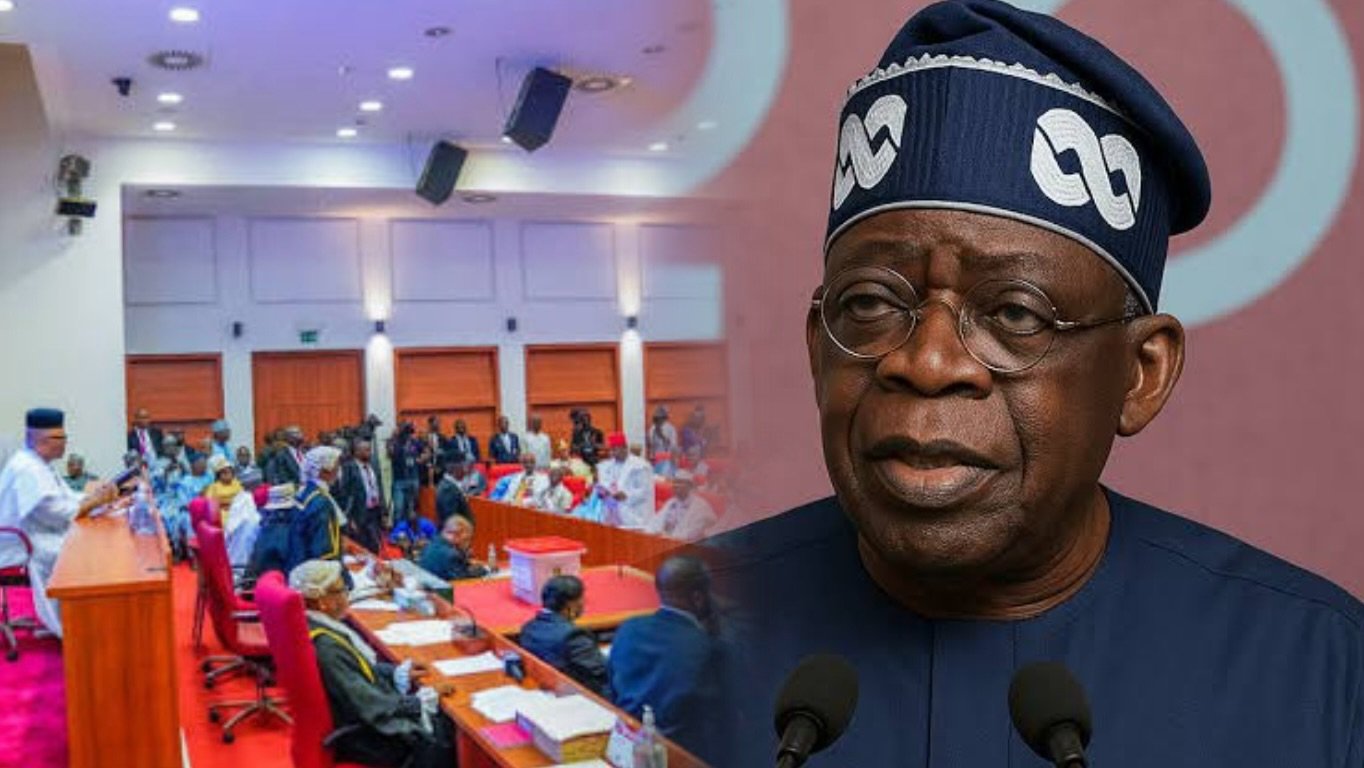
The House of Representatives was on Wednesday thrown into a rowdy session after lawmakers clashed over a proposal to invite President Bola Tinubu to explain the alleged non-release of funds for constituency projects and the poor implementation of the 2026 budget.
Our correspondent in the state house, Abuja reported that the tension erupted during the consideration of a motion sponsored by the member representing Aba North/Aba South Federal Constituency, Abia State, Alex Ikwechegh, on the poor funding of appropriated budgets and persistent delays in the release of capital funds to Ministries, Departments and Agencies (MDAs).
The debate followed a constitutional Point of Order raised by the member representing Okpe/Sapele/Uvwie Federal Constituency, Delta State, Benedict Etanabene, who drew the attention of the House to a circular from the Office of the Accountant-General of the Federation suspending funding for zonal intervention and constituency projects pending fresh verification requirements.
Etanabene urged the House to invoke its constitutional oversight powers by inviting President Tinubu and members of his economic team to explain the rationale behind the directive.
Citing Sections 4, 88 and 89 of the 1999 Constitution (as amended), he argued that the National Assembly had a responsibility to demand accountability for budgets it had approved.
“We cannot explain to our constituents what is happening. The budgets are not being implemented. Today, Nigeria is implementing the 2024, 2025 and 2026 budgets concurrently. This is not in the best interest of the country,” he said.
He therefore urged the House to invite the President to explain the circumstances surrounding the circular halting funding for constituency projects.
The proposal immediately divided lawmakers, with members across party lines shouting in support and opposition, forcing Speaker Tajudeen Abbas to repeatedly call for order.
While presenting the substantive motion titled, “Urgent need to address the poor funding of appropriated budgets and delayed releases to MDAs as revealed during the 2026 budget defence sessions,” Ikwechegh said the integrity of the appropriation process depended not only on passing the budget but also on the timely release, cash-backing and utilisation of approved funds.
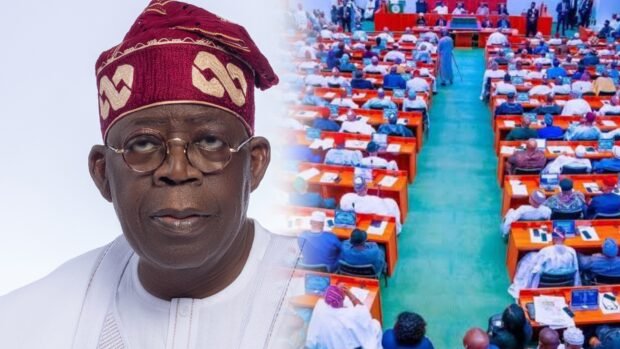
He recalled that during the 2026 budget defence sessions, several ministers and heads of MDAs disclosed that many agencies received little or no capital releases under the 2025 budget, while contractors had continued to protest unpaid certificates for completed projects.
According to him, the situation had left many indigenous contractors unable to repay bank loans obtained to execute government projects.
Ikwechegh also recalled that President Tinubu, at the Federal Executive Council meeting of December 10, 2025, directed the immediate settlement of verified contractor liabilities estimated at about N1.5 trillion and constituted an inter-ministerial committee to reconcile records and facilitate payments.
He noted that despite the presidential directive, legislative approvals and provisions in the 2026 Appropriation Act, releases to MDAs had remained slow, leading to abandoned projects, rising contract costs, contractor insolvency, growing non-performing loans and declining public confidence in the budget process.
The lawmaker further criticised a Treasury circular dated June 29, 2026, issued by the Office of the Accountant-General of the Federation, requiring contractors handling constituency projects to obtain a Certificate of Verification and Compliance from the Federal Ministry of Special Duties and Intergovernmental Affairs before payments could be processed.
He argued that the directive, though well-intentioned, had introduced another layer of bureaucracy capable of frustrating the implementation of already approved and executed projects.
Ikwechegh urged the House to commend the President for directing the settlement of verified contractor liabilities while calling on fiscal authorities to implement the directive without delay.
He also appealed to President Tinubu to honour an invitation to the House, alongside members of his economic team, to explain the continued poor implementation of the budget.
However, Speaker Abbas ruled that the proposal seeking to summon the President could not be adopted, describing such a move as inconsistent with parliamentary practice.
“The issue of summoning the President as included in the debate of Hon. Ikwechegh cannot be adopted by the House. Such action is unparliamentary,” the Speaker ruled.
The House subsequently adopted the substantive resolutions of the motion, urging the Federal Ministry of Finance, the Budget Office of the Federation, the Office of the Accountant-General of the Federation and the Central Bank of Nigeria to prioritise the timely release and cash-backing of appropriated funds.
It also called on the relevant authorities to publish a clear release schedule for the 2026 fiscal year and conclude the verification and payment of outstanding contractor liabilities within a publicly communicated timeframe.
About the author


Rwanda vs Nigeria: Chelle reignites the Super Eagles’ aspirations for the 2026 World Cup in Kigali.
On Friday, Eric Chelle became the inaugural non-Nigerian African coach to take the helm of the Super Eagles. The Malian coach directed his first match, resulting in a 2-0 win against Rwanda during a qualifying round for the 2026 World Cup. Chelle's appointment by the Nigeria Football Federation (NFF) took place on January 7, as he replaced Finidi George and succeeded interim coach Augustine Eguavoen. Since that time, he has dedicated three months to traveling across Nigeria, observing domestic league matches, and engaging with his players based in Europe. However, his initial team selection remained perplexing. Chelle opted for a highly offensive formation in Kigali, which appeared unbalanced on paper. Victor Osimhen, Samuel Chukwueze, Ademola Lookman, and Moses Simon were all included in the attacking lineup, while Alex Iwobi and Wilfred Ndidi occupied the midfield positions. "I had mixed feelings. […]

Tragedy as man loses three children to Abuja flood
A younger brother of the Peoples Redemption Party (PRP) 2027 senatorial candidate for Bauchi South, Alhaji Abubakar Aliyu Musa, has lost his three children to flooding in Abuja. According to report, the children, identified as Maryam, Umar and Hanifah, were swept away by floodwaters four days ago. Abubakar is the younger brother of Shehu Aliyu Musa, the PRP candidate for Bauchi South in the 2027 senatorial election. The PRP Bauchi State chapter said the body of Umar, the male child, had been recovered, while the bodies of the two girls were yet to be found as of October 4. Governor Bala Mohammed of Bauch State has condoled with the children’s father, Alhaji Abubakar Aliyu Musa, over the tragic incident. Mohammed in a condolence message issued by his Special Adviser on Media and Publicity, Mukhtar Gidado, described the loss of the […]

Ogun, NNPC Move to Revive OKLNG as $7bn Coastal Development Gathers Momentum
The Ogun State Government and the Nigerian National Petroleum Company Limited (NNPC) have commenced discussions on the revival of the long-delayed Olokola Liquefied Natural Gas (OKLNG) project in Ogun Waterside The development adds a major energy component to the emerging coastal investment corridor anchored by the proposed Gateway Deep Sea Port and the 10,000-hectare Ogun State Blue Marine Special Economic Zone. The renewed discussions followed the signing of Memoranda of Understanding between Ogun State and global ports and logistics operator, DP World, for the development of the deep sea port and economic zone. The agreements, signed in Paris in the presence of President Bola Ahmed Tinubu, are expected to attract more than $7 billion in initial investment and create over 50,000 direct jobs, according to the Ogun State Government. Receiving NNPC officials in Abeokuta on Wednesday, Governor Dapo Abiodun said […]
Drama as FUOYE students, staff foil police bid to arrest VC
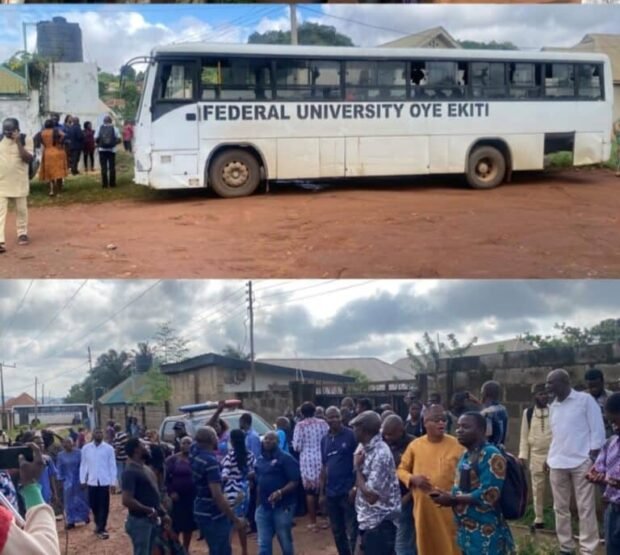
There was a mild drama in Ado Ekiti, Ekiti state capital, in the early hours of Wednesday as staff and students of the Federal University, Oye-Ekiti (FUOYE), prevented an attempt by the police to arrest the Vice-Chancellor of the university, Prof. Joshua Ogunwole. Ogunwole had raised the alarm that policemen were surrounding his residence in Ado-Ekiti with unclear mission. Our correspondent in Ado-Ekiti understands that the incident attracted members of the university community, including academic, non-academic staff and students to the Vice-Chancellor’s residence. They gathered in solidarity and prevented the alleged arrest. Addressing journalists at his residence in Ado-Ekiti, Ogunwole said the policemen arrived at his official residence at about 6:10am. He explained that his children woke him up after noticing the policemen around the house. The Vice-Chancellor said he initially declined to come out because he was unsure whether […]
Edo court sentences four kidnappers to death
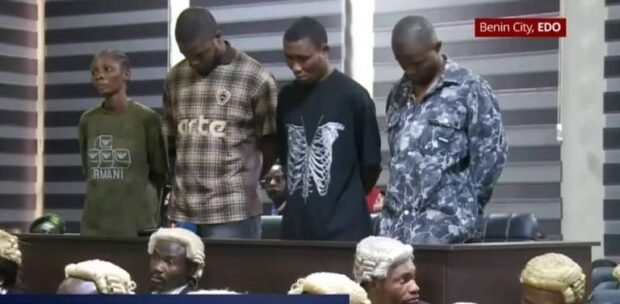
Relatives of four convicted kidnappers wept uncontrollably yesterday as an Edo State High Court sentenced them to death, bringing an emotionally charged end to the first kidnapping case publicly tried by the state’s Special Court for Cultism and Kidnapping Cases. The courtroom was filled to the brim as Justice Aigbona Terry Momodu handed down the sentences, a crowd gathered outside the court premises to catch a glimpse of the convicts as they were led away. The atmosphere evoked memories of the sentencing of notorious armed robber Lawrence Anini and members of his gang in the 1980s, whose case and subsequent execution became one of the most dramatic criminal justice episodes in the state. The four convicts – Marvellous Isaac, 32; Wisdom Michael, 36; Rufus Emete Michael, 30; and Gift Raphael, 27 – were sentenced to death by hanging or lethal […]

Police arrest five for wearing ‘Tinubu Must Go’ T-shirts
The Police has arrested and arraigned five men for allegedly wearing T-shirts bearing “Tinubu Must Go” inscription in Maiduguri, the Borno State capital. A First Information Report (FIR) issued by the State Criminal Investigation Department (SCID) and verified through court officials, named the defendants as Baba Aji Gremami, 44; Mustapha Abba Yemen, 28; Abbacha Mohammed Ali, 32; Adam Umar Gubio, 21; and Abdulhamid Mohammed, 21. The document, dated September 29, 2026, stated that the incident occurred on September 25, 2026, at about 11:00 a.m around the West End Roundabout community in Maiduguri. The police charged the defendants with criminal conspiracy, inciting disturbance, disturbance of public peace, and thuggery—offences the prosecution argues run contrary to Sections 60, 78, 79, and 392 of the Borno State Penal Code. When the case was brought before the Chief Magistrate Court I in Maiduguri, all […]
Police arrest Education Commissioner, three others over deputy director’s death
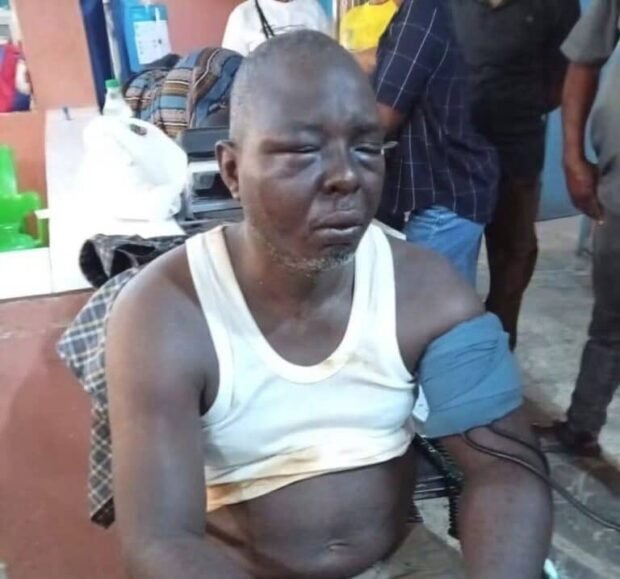
The Police has arrested the Commissioner for Secondary Education in Delta State, Dr Kingsley Ashibogwu, and three others over the death of Mr Unity Ekpevbughe Adeda, a Deputy Director in the state Ministry of Secondary Education. This brings to five the number of suspects currently in police custody in connection with the investigation into the circumstances surrounding the death of Adeda. The spokesperson for the Police Command in the state, SP Bright Edafe made the disclodure in a statement on Monday in Asaba. The command also declared a manhunt for the Director of Basic and Secondary Education, Mrs Clemetine Ufuoma, and Clement Apia, the driver attached to the Commissioner for Secondary Education. The police said the presence of the two suspects was required to advance the investigation. The command urged Ufuoma and Apia to make themselves available to the police […]
Related
Tragedy as man loses three children to Abuja flood
A younger brother of the Peoples Redemption Party (PRP) 2027 senatorial candidate for Bauchi South, Alhaji Abubakar Aliyu Musa, has lost his three children to flooding in Abuja. According to report, the children, identified as Maryam, Umar and Hanifah, were swept away by floodwaters four days ago. Abubakar is the younger brother of Shehu Aliyu Musa, the PRP candidate for Bauchi South in the 2027 senatorial election. The PRP Bauchi State chapter said the body of Umar, the male child, had been recovered, while the bodies of the two girls were yet to be found as of October 4. Governor Bala Mohammed of Bauch State has condoled with the children’s father, Alhaji Abubakar Aliyu Musa, over the tragic incident. Mohammed in a condolence message issued by his Special Adviser on Media and Publicity, Mukhtar Gidado, described the loss of the […]
Ogun, NNPC Move to Revive OKLNG as $7bn Coastal Development Gathers Momentum
The Ogun State Government and the Nigerian National Petroleum Company Limited (NNPC) have commenced discussions on the revival of the long-delayed Olokola Liquefied Natural Gas (OKLNG) project in Ogun Waterside The development adds a major energy component to the emerging coastal investment corridor anchored by the proposed Gateway Deep Sea Port and the 10,000-hectare Ogun State Blue Marine Special Economic Zone. The renewed discussions followed the signing of Memoranda of Understanding between Ogun State and global ports and logistics operator, DP World, for the development of the deep sea port and economic zone. The agreements, signed in Paris in the presence of President Bola Ahmed Tinubu, are expected to attract more than $7 billion in initial investment and create over 50,000 direct jobs, according to the Ogun State Government. Receiving NNPC officials in Abeokuta on Wednesday, Governor Dapo Abiodun said […]
Drama as FUOYE students, staff foil police bid to arrest VC
There was a mild drama in Ado Ekiti, Ekiti state capital, in the early hours of Wednesday as staff and students of the Federal University, Oye-Ekiti (FUOYE), prevented an attempt by the police to arrest the Vice-Chancellor of the university, Prof. Joshua Ogunwole. Ogunwole had raised the alarm that policemen were surrounding his residence in Ado-Ekiti with unclear mission. Our correspondent in Ado-Ekiti understands that the incident attracted members of the university community, including academic, non-academic staff and students to the Vice-Chancellor’s residence. They gathered in solidarity and prevented the alleged arrest. Addressing journalists at his residence in Ado-Ekiti, Ogunwole said the policemen arrived at his official residence at about 6:10am. He explained that his children woke him up after noticing the policemen around the house. The Vice-Chancellor said he initially declined to come out because he was unsure whether […]
Edo court sentences four kidnappers to death
Relatives of four convicted kidnappers wept uncontrollably yesterday as an Edo State High Court sentenced them to death, bringing an emotionally charged end to the first kidnapping case publicly tried by the state’s Special Court for Cultism and Kidnapping Cases. The courtroom was filled to the brim as Justice Aigbona Terry Momodu handed down the sentences, a crowd gathered outside the court premises to catch a glimpse of the convicts as they were led away. The atmosphere evoked memories of the sentencing of notorious armed robber Lawrence Anini and members of his gang in the 1980s, whose case and subsequent execution became one of the most dramatic criminal justice episodes in the state. The four convicts – Marvellous Isaac, 32; Wisdom Michael, 36; Rufus Emete Michael, 30; and Gift Raphael, 27 – were sentenced to death by hanging or lethal […]
Police arrest five for wearing ‘Tinubu Must Go’ T-shirts
The Police has arrested and arraigned five men for allegedly wearing T-shirts bearing “Tinubu Must Go” inscription in Maiduguri, the Borno State capital. A First Information Report (FIR) issued by the State Criminal Investigation Department (SCID) and verified through court officials, named the defendants as Baba Aji Gremami, 44; Mustapha Abba Yemen, 28; Abbacha Mohammed Ali, 32; Adam Umar Gubio, 21; and Abdulhamid Mohammed, 21. The document, dated September 29, 2026, stated that the incident occurred on September 25, 2026, at about 11:00 a.m around the West End Roundabout community in Maiduguri. The police charged the defendants with criminal conspiracy, inciting disturbance, disturbance of public peace, and thuggery—offences the prosecution argues run contrary to Sections 60, 78, 79, and 392 of the Borno State Penal Code. When the case was brought before the Chief Magistrate Court I in Maiduguri, all […]
Police arrest Education Commissioner, three others over deputy director’s death
The Police has arrested the Commissioner for Secondary Education in Delta State, Dr Kingsley Ashibogwu, and three others over the death of Mr Unity Ekpevbughe Adeda, a Deputy Director in the state Ministry of Secondary Education. This brings to five the number of suspects currently in police custody in connection with the investigation into the circumstances surrounding the death of Adeda. The spokesperson for the Police Command in the state, SP Bright Edafe made the disclodure in a statement on Monday in Asaba. The command also declared a manhunt for the Director of Basic and Secondary Education, Mrs Clemetine Ufuoma, and Clement Apia, the driver attached to the Commissioner for Secondary Education. The police said the presence of the two suspects was required to advance the investigation. The command urged Ufuoma and Apia to make themselves available to the police […]
Be the first to leave a comment